Biyernes, Abril 22, 2016

Secrets For Choosing the Right Mobile Messaging Channel

Have you ever deleted an app from your device because it sent you too many push notifications? Or wondered why your latest flight info is popping up as a text message, rather than in your digital wallet?


Bad messaging channel choices, that's why. Mobile devices offer you a huge number of different ways to connect with your users and customers. Each channel is best suited to convey different types of messages. Pick the right one for what you want to say!


If you don't have an app…


Even without an app, you have a few options for getting messages to your users on their mobile devices.


Text messaging


The original mobile channel. SMS and MMS can reach anyone who's given you their number, and your messages arrive right away. You're limited in how nice you can make your message look, and text messages aren't very interactive. But all you need is a phone number to get started.


Text is best used for simple, urgent messages, particularly transactional ones, like flight status updates. (But only if you don't have an app!) They're often used for discounts and another infrequent announcements as well, but you'll have much more success with messages sent through an installed app.


Website


Marketers often don't think of their website or web app as a communication channel. But it is. It's just passive; mostly, you have to wait for your users to come to you. This makes it difficult to provide timely updates, and you lose a lot of context, like your visitor's exact location. But you can closely track what your user is doing, and let them immediately take many different types of actions.


Your website is best used for messages that aren't urgent, and that are meant to be acted on when your user is on your site. For example, a month-long sale is useful to promote through your site, since many of your regular visitors will see it, and you can link them right to sale items. Shipping notifications are much less useful to send through your site, since your user won't see them right away. As another example, it's hard to re-engage dormant users on your site, but it's a great channel for acquiring new ones.


Digital Wallet


Apple and Google are constantly adding features to digital wallet passes. It's appropriate to think of the digital wallet as a lightweight version of an app. Passes are easy to distribute, easy for a user to add, and can have some branding that helps users recognize and remember you.


They can pop up at certain locations where they're most useful, for example, near your store. And they can be updated with new information as needed.


Use a digital wallet pass any time you would otherwise hand your user a piece of paper or plastic. Tickets, loyalty cards, payment cards, and coupons are all great uses for digital wallet passes. Specific messages about product updates, promotions, and transactional communications are not as good a fit.
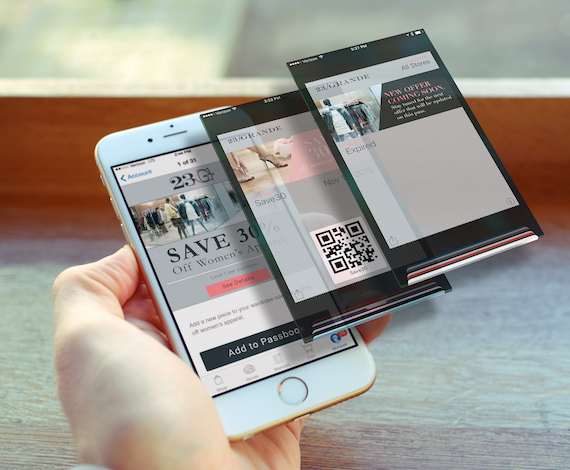

Mobile-Pass-Retail-Offer


If you do have an app…


If you have an app, your options broaden considerably.


Push notifications


Everyone's received a push notification. If you get a user to install your app, you can send one at any time; your user doesn't even have to be in the app to see it. They're easy to brand, and you can even specify actions for the user to take with a single tap.


Push notifications are great for delivering small amounts of real-time information (like sports scores, notifications, and news), and also for getting a user to take an action, such as learning about a special promotion. However, they only reach people who have opted-in, which is usually less than half of your users. They're also high stakes; users will notice immediately if you send irrelevant content, and they'll turn off push access off for your app, or even uninstall it.


In-app messages


In-app messages are similar to push notifications, but they're delivered to your users while they're active in your app. You can put real-time updates in them, and, unlike push notifications, they don't require opt-in in order to be received.


In-app messages are great complements to push notifications for users who haven't opted in, and can be used to send similar, highly-targeted messages, such as real-time information that's relevant within the context of your app.
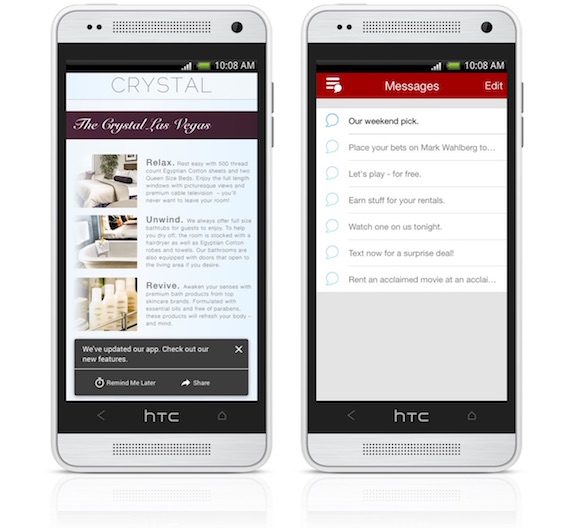

InApp_vs_MessageCenter


Message center


This is a completely passive channel inside your app. The message center archives messages that have been sent to your users in the past, and makes them accessible later. This is a great channel for storing things that don't require immediate action and that might be most useful when a user is already in your app.


What should you send?


No matter what channel you use, your user's attention is a precious resource, and you have to make sure that what you're sending is valuable to them. Answer these questions before you use any of these channels:


What's the purpose of your message?


What action do you want the user to take when they receive it? Figuring this out will make it easier to decide on whether you need a channel with interactivity; it will also help you figure out how truly urgent your message actually is, and how to measure its success. Is there a call to action, or is this purely for brand awareness?


What context does your message matter in?


Mobile messaging is all about context: time, location, user preferences. Deciding what context is truly important will help you pick the right channel. For example, if something matters in real-time, you'll want to use push. If it matters when the user gets to it, you could try an in-app message.


Will your user care?


Worry about whether what you're sending is useful. If you're Twitter, it might be OK to send 20 push notifications a day, if your user wants to keep a close eye on their followers. If you're Candy Crush, maybe you shouldn't even send one push notification a week, because your user is a casual gamer who doesn't care about new features. If you focus on delivering what your user wants, you'll have to worry a lot less about everything else.


Conclusion


As a mobile marketer, you've got lots of channels to choose from. We haven't even touched on emerging channels, like chatbots and wearables, which will play an increasingly large role in delivering useful content to your users. The key with any channel is to match the characteristics of the message to the medium. And don't forget to listen to your users, too - if you pay attention to their responses and preferences, they'll tell you how and what they want delivered.


About the Author: Justin Dunham is Lead, Marketing Technology and Analytics at Urban Airship, the leading mobile engagement platform. Urban Airship helps leading brands engage their mobile users and build high-value relationships from the moment customers download an app. For more, follow us on Twitter or LinkedIn.


Huwebes, Abril 21, 2016

Is it better to buy or rent in retirement?

Buying a home in retirement only makes financial sense if you plan on leaving the equity as an inheritance, according to a new report from Trulia.

5 Ways Data Improves Your SaaS Conversion Funnel

Not using data is a missed opportunity for SaaS companies.


If your team is seeking to bring in more revenue, data helps your conversion funnel. It's the difference between knowing your customer or simply taking a wild guess.


Matt Ackerson, founder of Petovera, says, “The rise of the smart sales funnel is happening now. You can expect it to become a near marketing 'requirement' as businesses adopt the strategy and new tools and tech come out around the concept.”


Whether it's acquiring more qualified leads or retaining loyal consumers, build your sales system on a foundation of analytics. This provides your team with the ability to produce informed decisions.


Make a deliberate effort to focus on the data. Here are five ways to improve your sales funnel.


1. Spark Interest With Awareness


Studies show that “72% of buyers turn to Google during awareness stage research.” Your customers are constantly searching for solutions to their problems.


That's why your team must be ready to provide solution-oriented content. Not only will it answer their most pressing issues, but great content also will engage them in learning more about your SaaS brand and products.


Grab your prospects' attention with data-driven content.


“…[D]etermine their interests and how they act upon those interests. While it may not be feasible to develop true one-to-one content at scale, you can use this data to pinpoint common characteristics and habits of individual audience segments…” writes Brad Messinger, senior vice president of marketing, Rise Interactive.


Conduct keyword research to understand your consumer's intent. Find high-performing keywords with tools such as, Google Keyword Planner and Keyword Tool.


Find out what your customer desires. Then, generate awareness around that subject.


webinar-recap-advertisement


For example, host a webinar. It will display your SaaS's expertise and provide your audience with useful information. Keep it short and engaging.


After the webinar, you can post a recap on your blog with the slides and additional details.


2. Nurture Targeted Leads


MarketingSherpa reports that “79% of marketing leads never convert into sales. Lack of lead nurturing is the most common cause of this poor performance.”


Several reasons exist for inadequate lead nurturing. Your team may be targeting the wrong people. Your lead capturing system fails to filter out unqualified leads. Or you're not providing the right service to the right client.


“Evaluate your target market and make sure you understand what B2B buyers in your sector really value. With this in mind, you can communicate the cost benefits, ROI, and affordability of your products or services in a way that will really resonate with your audience,” says Leo Patel, freelance writer and digital strategist.


Nurturing involves catering to several types of customers. Data segmentation is an effective tool for sending tailored messages to different people. Moreover, a targeted campaign can help reduce your budget costs.


Develop buyer personas based on industries, website behavior, and past purchases.


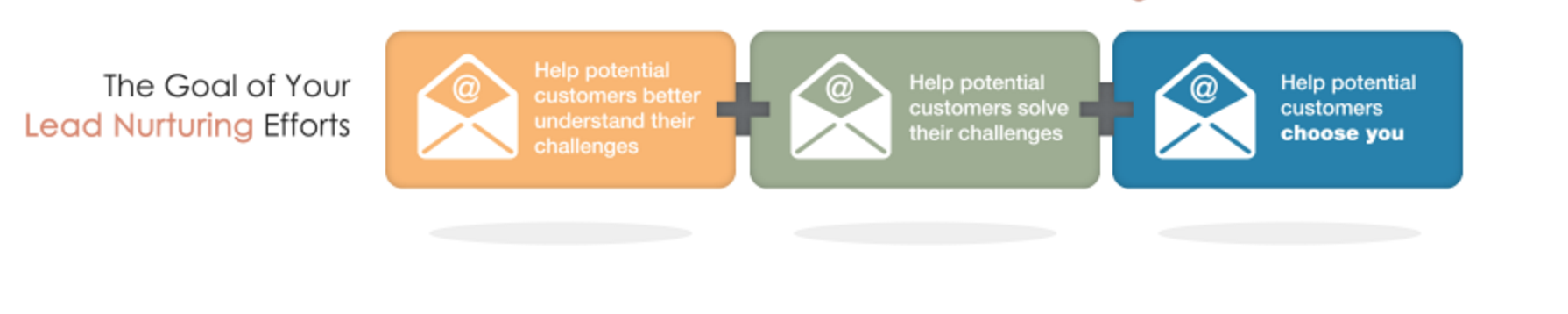
goal-of-lead-nuturing-efforts


Think of nurturing as a process, not a one-time transaction. It's rare that people will make a purchase from just one interaction.


Rather, train your SaaS team to execute multiple customer touch points. Explore what excites and intrigues your customers.


3. Cultivate Trust for the Sale


Customers don't buy products from companies. They buy from their family and friends.


In other words, consumers make purchasing decisions based on recommendations from people they respect. Trust is the cornerstone of most sales transactions.


Ensure customers that your SaaS product is trustworthy. And social proof helps decrease the customer's purchasing resistance.


“The best part about social proof techniques is that they are fairly simple to implement. They don't require a lot of effort to be put up, and certainly not much investment in terms of cash,” says, Deeksha Bahl, social media manager at VWO.


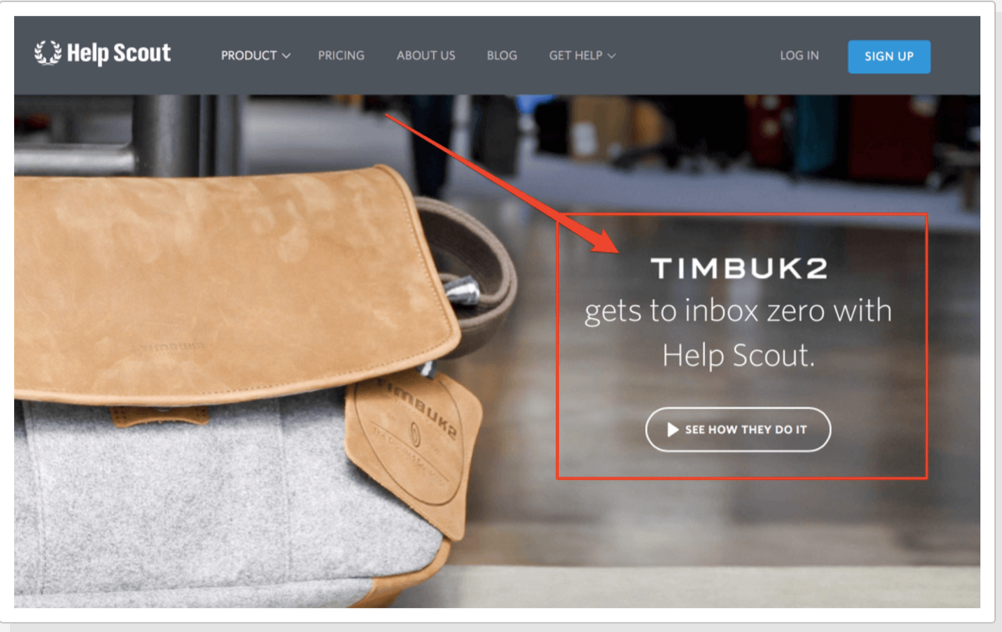
Case studies provide insight into a current customer's story. They also convince prospects who need that extra push to purchase. HelpScout provides interested buyers with video case studies.


help-scout-video-case-study


Trust is hard to earn but easy to lose. So, don't take it for granted.


Walter Rogers, CEO of CCI Global Holdings, advises to never misrepresent the benefits of your product:


“Customers don't want a product or solution that only comes close to meeting their needs, or that usually functions properly. Give them the whole, unvarnished truth, and let them decide if the proposed solution will work for them.”


4. Adjust the Onboarding Process


McKinsey found that “satisfaction on customer journeys is 30% more predictive of overall customer satisfaction than measuring happiness for each individual interaction.”


Just because the sale is complete doesn't mean your work is done. An effective onboarding process cements your new customer's success.


“After the initial welcome email, you have a great opportunity to keep your new customer engaged and educated by sending them a drip campaign of emails. This is your best chance of getting the customer to really use all the features of your product,” states Ed Shelley, Director of Content Marketing at ChartMogul.


Identify friction points preventing your customer from loving your product.


What's causing them to stop using your service? Are their questions being fully answered? How can you improve customer interactions?


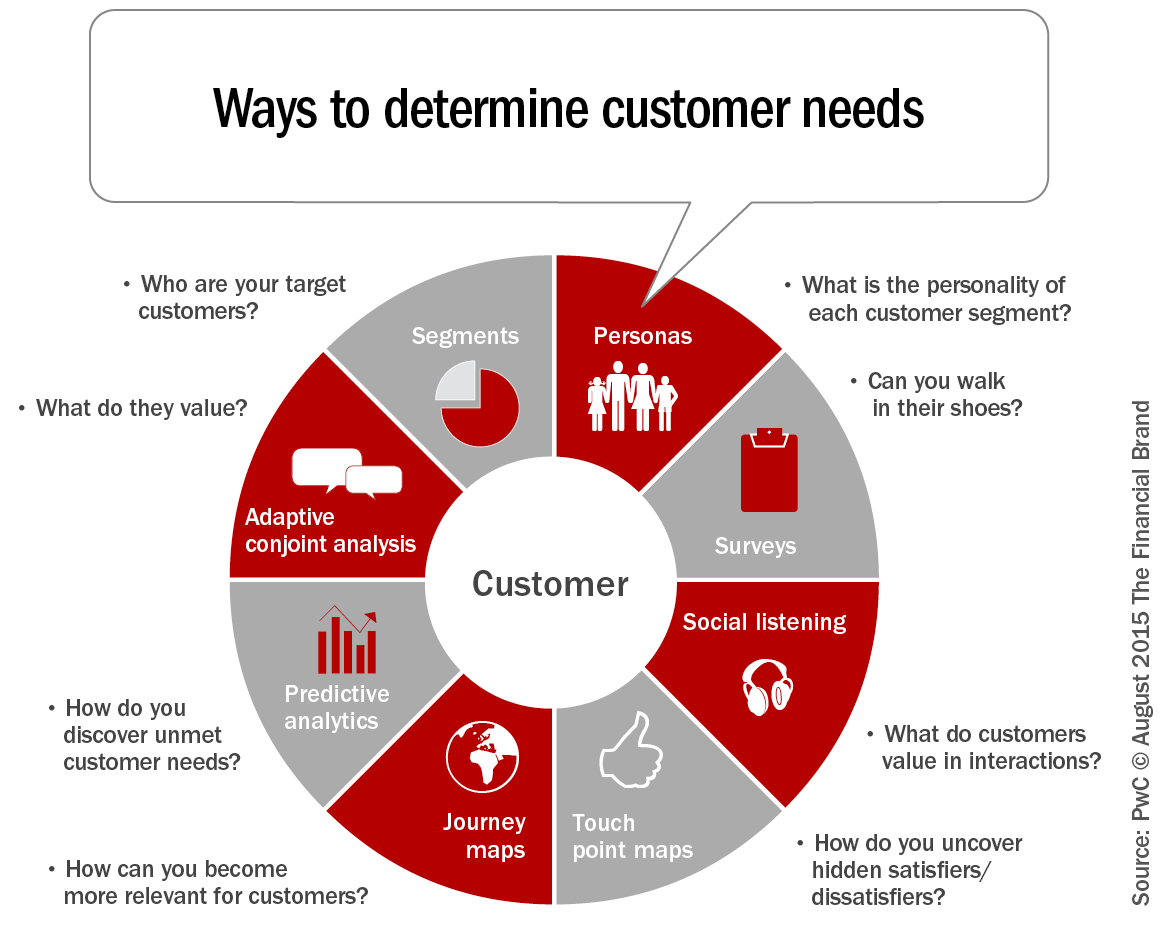
Delivering accurate onboarding means understanding what customers value. Use multiple inputs from the customer analyses to make improvements.


ways-to-determine-customer-needs


One way is to collect qualitative data from in-app messaging conversations. Observe what features and functions interest customers.


On the Frontleaf blog, Rachel English also suggests analyzing various customer data streams. Monitor what your onboarding customers do:


  • In the application

  • In terms of results achieved

  • In scheduling or attending coaching sessions

  • In providing feedback on surveys

  • In their interactions with support

  • In their consumption of self-service resources

  • In any way you can track


After the sale, go above and beyond to satisfy your customer. Your goal is to create the best user experience.


5. Retain the Right Customer


According to reports, “80% of your company's future revenue will come from just 20% of your existing customers.”


SaaS companies normally get anxious about renewals. They want customers to renew today or else.


That's when unethical sales practices arise. Then, customers that once loved your services become skeptical and decide not to repurchase.


Develop loyalty programs that encourage relationships, rather than more sales. Give customers a reason to be a part of your brand, not just your product.


“[I]t's reducing customer effort that's the single most important factor in creating customer loyalty,” states Len Markidan, head of marketing at Groove.


Insert personalization into your customer retention strategy. Customization provides relevancy and a one-of-a-kind experience to your loyal consumers.


Carol Roth, on-air contributor for CNBC, writes:


“Many of the biggest brands have failed to do this despite having multimillion-dollar marketing campaigns. Customers are all driven by different parameters, which means that you need to do a lot of listening and keeping track of the likes, dislikes and drivers of your customers' behavior.”


how-to-earn-points-whos-hoo


Luxury hoodie retailer Evy's Tree created the Who's Hoo Rewards Program. It focuses on creating engaged customers through rewards and referrals.


The Data-Driven Funnel


We all know data is important for SaaS conversions. It's one way to gain a competitive edge in the marketplace.


Gain brand awareness with customized content. Use analytics to discover new ways to cultivate customer relationships. And adjust your process to fix any onboarding problems.


Data is here. Improve your sales funnel.


About the Author: Shayla Price lives at the intersection of digital marketing, technology and social responsibility. Connect with her on Twitter @shaylaprice.


Martes, Abril 19, 2016

How to Improve Your Conversion Rate By 50% in One Day

Anyone who's worked in digital marketing knows that conversions are the lifeblood of any online marketing campaign.


You run a marketing campaign to get people to do something-sign up for your services, buy your product, fill out a lead gen form, give you their email, etc.


Essentially, you market in the hopes that people will do what you want them to do and eventually produce profitable revenue for your company.


A good campaign will get a lot of people to take your conversion action.


An ineffective campaign won't.


As a result, improved conversion rates are a key goal for any decent digital marketer. Marketing costs money, so the higher your conversion rate, the more bang you get for your buck.


fifty-conversion-rate-one-day


Improving your conversion rate is a great goal, but to do that, we need to look at your conversion tracking.


Tracking Conversions


One of the fundamental ideas behind conversion rate optimization (CRO) is the notion that you are effectively tracking conversions.


Think about it, in order to improve your conversion rates, you have to actually know what your conversion rate is to begin with!


And, to do that, you need fantastic conversion tracking in place.


Unfortunately, most marketers aren't tracking their conversions effectively. To understand how this affects conversion rate, let's take a look at how well marketers are implementing conversion tracking in AdWords.


AdWords Conversion Tracking


AdWords is an ideal medium for conversion tracking.


Google itself makes implementing conversion tracking incredibly easy and paid search is typically a direct response marketing channel, which means that most of your conversions should be directly attributable to clicks on specific campaigns.


In contrast, higher funnel marketing campaigns like social media or branding efforts can be a lot harder to effectively track.


It's doable, but it's harder.


Since conversion tracking is so easy in AdWords, you'd think that every marketer would have great conversion tracking in place, right?


halpert-no


Sadly, that's not the case.


Over the past 2 years, we've audited well over 2,000 AdWords accounts at Disruptive Advertising. Amongst all of those audits, perhaps one of the most common problems was a lack of effective conversion tracking.


Accounts Without Conversion Tracking


To the credit of everyone who's encouraged conversion tracking over the years, 57.7% of AdWords accounts had set up some level of conversion tracking.


But, if only 57.7% of accounts have tracking in place, then 42.3% of AdWords account managers have absolutely no idea whether or not their campaigns are working.


total-disaster-cropped


Not surprisingly, AdWords campaigns without tracking rarely turn a profit.


In fact, according to Hubspot's State of Inbound report, 97% of inbound marketing campaigns without tracking fail.


So, even in AdWords-one of the most trackable marketing platforms-42% of campaigns have almost no chance of success.


Accounts With Conversion Tracking


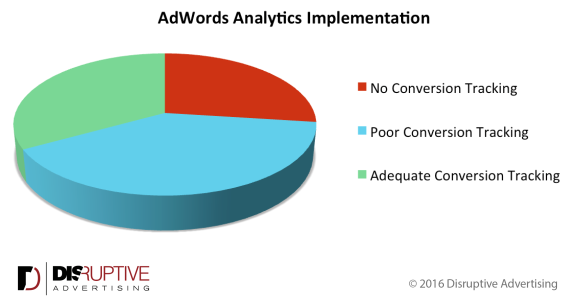
Of the 58% of AdWords accounts with conversion tracking, half were only tracking a small percentage of their actual conversions.


In other words, 29% of AdWords accounts are technically tracking conversions, but their setup is so poor that they might as well not be tracking anything at all.


adwords-analytics-implementation


For example, in the plumbing/HVAC industry, phone calls are a major source of leads.


However, most plumbing/HVAC companies only track form submissions, which are few and far between-making forms a terrible indicator of campaign effectiveness!


Plumbers aren't the only ones with this problem, either. Many companies with millions of clicks have only a handful of conversions to their name.


Are they tracking conversions?


Technically, the answer is “yes,” but their conversion tracking isn't painting an accurate picture of the effectiveness of their marketing campaigns.


AdWords Conversion Rates


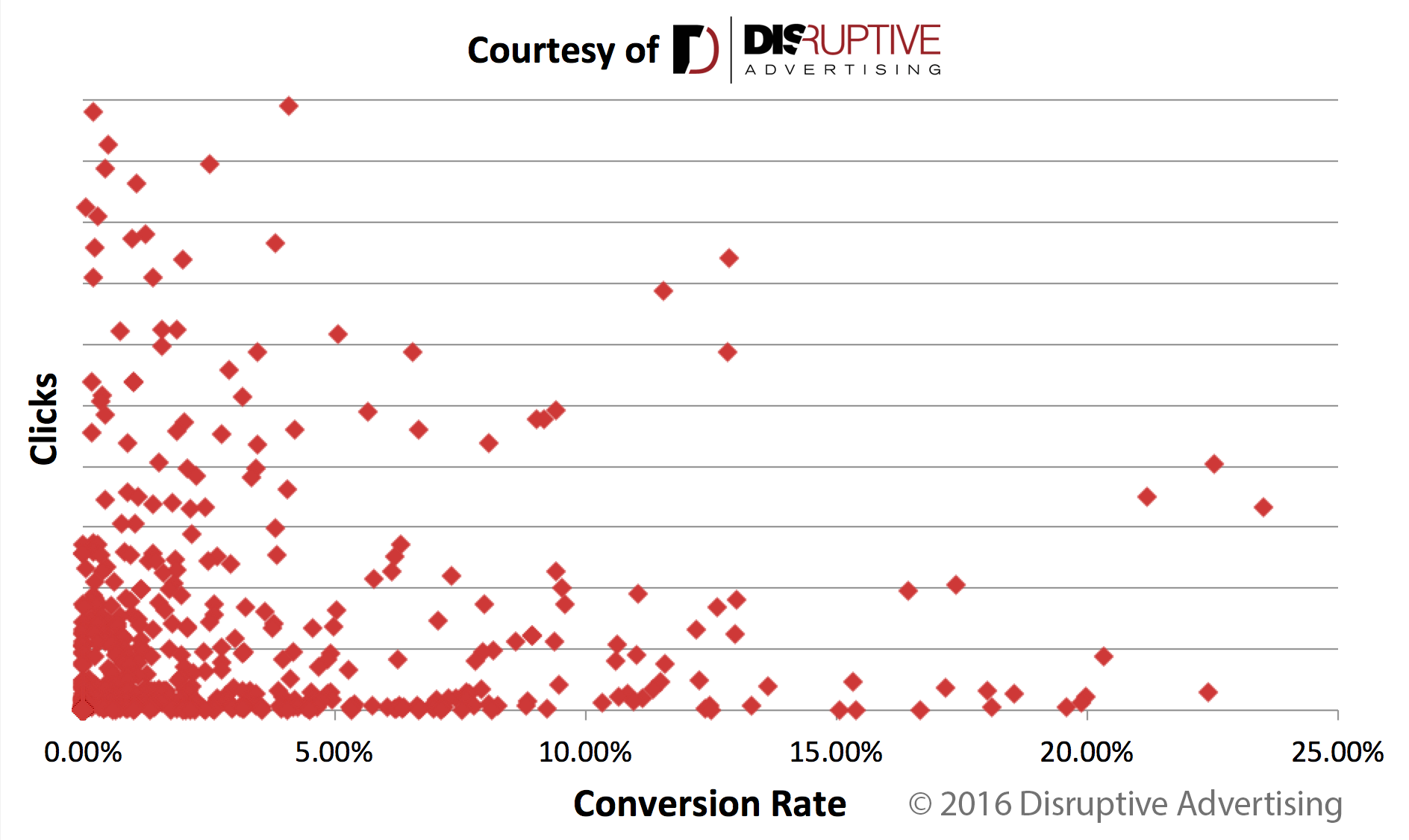
Generally speaking, a conversion rate of 2-3% is considered “typical” for an AdWords account.


Based on our data, it's easy to see why:


clicks-vs-conversions


Clearly, the vast majority of accounts-regardless of how many clicks they get-fall into the 0-5% conversion rate window.


Conversion Rate Benchmarks


A couple of years ago, Wordstream ran an analysis on hundreds of AdWords accounts to try and create conversion rate benchmarks for AdWords performance.


Here's what they found:


  • The median AdWords account had a conversion rate of 2.35%.

  • The bottom 25% of accounts had a conversion rate of 0-1%.

  • The top 25% of accounts had conversion rates of 5.31% or better.


To validate their results and see if anything had changed, we used Wordstream's criteria and ran the same analysis on our audit data.


Not surprisingly, our results were very similar:


  • The median conversion rate for an AdWords account is 2.18%.

  • 27.5% of accounts lie in the 0-1% conversion rate range.

  • The top 25% of accounts have a conversion rate better than 5.34%.


Here's how the conversion rate distribution breaks down.


conversion-rate-distribution


As you can see, 75% of AdWords accounts have a conversion rate between 0% and 5.34%.


It's a little harder to calculate from this chart, but the top 10% of advertisers have a conversion rate of over 11.03% (in Wordstream's study, the top 10% had a conversion rate of 11.45% or better).


So, if more than 5.34% of your clicks are converting, that means your conversion rate is better than 75% of AdWords advertisers.


If your conversion rate is above 11.03%, your account is in the top 10% of all AdWords accounts.


Great news, right?


Well, maybe…


Where Wordstream Went Wrong


As we were replicating Wordstream's analysis, we realized that our results weren't representative of actual account performance.


The data was skewed by bad conversion tracking.


oops


Remember, in our audit process, we discovered that while 58% of AdWords accounts were tracking conversions, only 29% actually had an effective setup in place.


By including all of those poorly-tracked accounts in our analysis, we were heavily underestimating the actual conversion rate of AdWords accounts.


To Wordstream's credit, they had tried to account for this by excluding accounts with less than 10 conversions, but that still left a lot of accounts that we knew from our audit process weren't tracking conversions effectively.


So, we reran our analysis. But, this time we only included the few hundred accounts we knew had good conversion tracking in place.


Here's what we found:


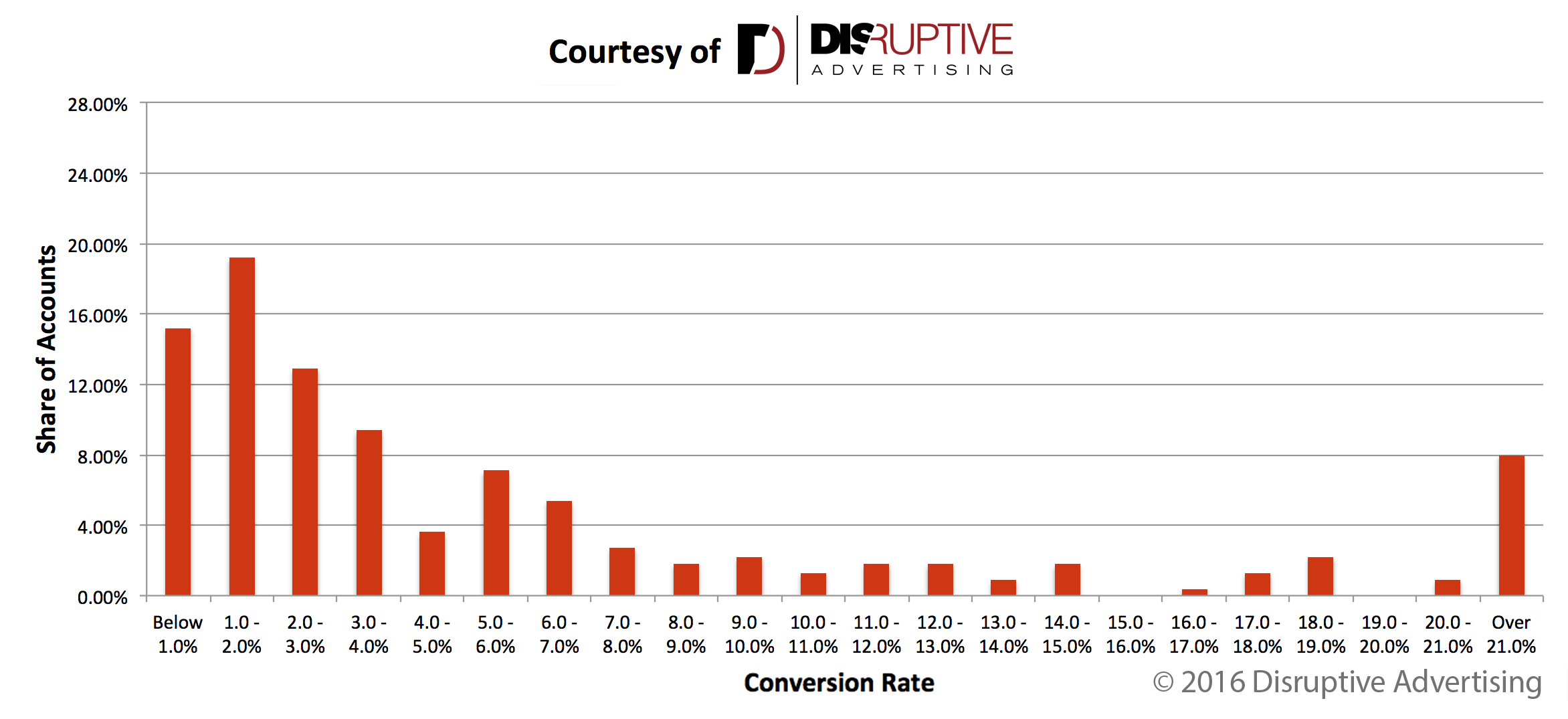
  • The median conversion rate for a well-tracked AdWords account is 3.16%.

  • Only 15.2% of these accounts have a conversion rate of 0-1%.

  • The top 25% of accounts have a conversion rate of 7.82% or better.

  • The top 10% of well-tracked accounts have a conversion rate of over 20%!


Here's the conversion rate distribution for well-tracked AdWords accounts:


conversion-rate-distribution-good-tracking


As it turned out, well-tracked AdWords accounts have a nearly 50% higher conversion rate than the average AdWords account.


What does that mean for your company?


Well, if you are advertising on AdWords and have conversion tracking in place, it's even odds that you are only tracking two-thirds of your conversions.


If you're advertising in one of those harder-to-track channels like social media, you're probably missing out on even more conversions.


How to “Improve” Your Conversion Rate in One Day


This brings us back to improving conversion rates.


To put it simply, the easiest way to improve your conversion rate is to start effectively tracking the conversions you are already getting.


That means tracking everything-phone calls, form submissions, sales, sign-ups, online chats, in-store visits-everything!


In many cases, simply accounting for your missing conversions will increase your conversion rate by 50% or more…overnight.


its-a-miracle


This will probably make your boss very happy in the short-term, but-more importantly-it will set you up for long-term success.


Think about it, if you are only tracking some of your conversions, do you really know which campaigns are your top producers?


A campaign that drives very few form submissions may actually generate a ton of chat leads. But, if you aren't tracking chats, you might assume one of your top campaigns is a flop.


Regardless of which online marketing medium you're using, great analytics tracking is key to advertising success. Without the right data, you could be leaving a ton of money on the table.


By knowing which campaigns deserve your dollar, you can dramatically improve your conversion rate, return-on-investment and capture a lot more market share.


So, take the time to work with an analytics platform like Kissmetrics or Google Analytics, get your conversion tracking set up right and start making more money.


Conclusion


Proper conversion tracking can make a world of a difference to your conversion rate.


We've seen the short- and long-term benefits of implementing effective conversion tracking with hundreds of clients, so it's well worth the time and effort.


The data may not always be as clearcut as our AdWords findings, but regardless of how you are marketing your company, quality conversion tracking is always the key to better conversion rates.


How does conversion data affect your online marketing decisions? Did you find any of this data surprising? Let me know in the comments!


About the Author: Jacob Baadsgaard is the CEO and fearless leader of Disruptive Advertising, an online marketing agency dedicated to using PPC advertising and website optimization to drive sales. His face is as big as his heart and he loves to help businesses achieve their online potential. Connect with him on LinkedIn or Twitter.


Biyernes, Abril 15, 2016

Yes, I Can Accept that Assignment! USPAP Flexibility at a Glance

Some appraisers may not be aware of the inherent flexibility built into the Uniform Standards of Professional Appraisal Practice (USPAP). This factsheet from The Appraisal Foundation provides examples of such flexibility.


Download this factsheet from The Appraisal Foundation

Huwebes, Abril 14, 2016

Did San Francisco's housing market finally peak?

Home prices in San Francisco dropped 1.8% in March, the first decline in four years.

The Biggest Customer Acquisition Mistake That Your Company is Probably Making

Generating new sales leads and acquiring new customers are the biggest obsessions of every sales team and startup founder. Companies spend big money on lead generation, PPC ads, social media marketing, sponsored posts, content marketing, and other varieties of inbound lead generation techniques to get new customers.


But what if I told you that the real problem facing your business is not “getting” new customers – it's “keeping” the new customers that are already interested in your company?


The biggest customer acquisition mistake that many companies make is not qualifying their new sales leads. Without careful handling and a consistent process to get to know your new prospective customers, your new sales leads are likely to fall through the cracks.


The Big Disconnect


Here is a surprising truth about digital marketing: many companies are pulling out all the stops to get new customers, and then not paying any attention to what happens once those new customers actually reach out to contact the company.


Inbound lead generation is a huge preoccupation for many sales teams and digital marketers, with big spending on automated lead generation software, content marketing platforms, social media ads, and all of the other ways that companies invest in generating new sales leads.


But here's the disconnect: after spending all that money, far too many companies don't make any effort to analyze, sort, rank, and prioritize their follow-up strategy for these new business leads.


Not All Sales Leads Are Equal


Some new leads are urgently ready to buy and are eager to enter the sales process; others are just doing their preliminary research and might need a longer-term “lead nurturing” process before they have enough trust and confidence in your solution to be ready to buy.


But too many companies act like every new sales lead is the same!


According to statistics cited by HubSpot, 61% of B2B marketers simply send all of their new sales leads directly to the sales team, but only 27% of these leads are actually qualified and ready to buy.


This means that there is a huge amount of wasted time and miscommunication happening. If you're sending unqualified sales leads to your sales team – without even asking any preliminary questions to get to know the prospects better – you are wasting your sales people's time and missing out on big sales opportunities. Every unqualified sales lead is diverting your sales team's attention from better-qualified leads that are more eager and ready to buy.


Here are a few easy ways to improve your inbound lead qualification process to make sure your sales team is getting the best sales leads – and thus saving time and delivering more efficient sales results:


Step 1. Have a preliminary conversation


Whenever your company hears from a new sales lead for the first time – whether it's a phone call or email or social media contact – you need to have a process in place to follow up with that prospect and ask them a few preliminary questions. This is called “pre-qualifying” your sales leads – you need to find out upfront how much they know about your company, how far along they are in their purchasing process, and how much “pain” they're experiencing that is motivating them to buy.


For example, you could ask the following questions – either by phone or via an email or even an online intake form:


  • How did you find out about our company/our solution?

  • What made you decide to contact us?

  • What business challenges are you currently facing, and how do you think our product/solution could help?

  • How soon do you expect to make a purchase decision?


Note that all of these questions are open-ended – not simple “yes/no” questions. Your goal is to get your prospects to open up a bit and share what's on their mind – this can give you good insights into which prospects are really ready to buy.


Pre-qualifying sales leads is not an exact science – sometimes prospects will be misleading or vague – but having a preliminary conversation is an essential step to get your sales process started.


Step 2. Rank your sales leads


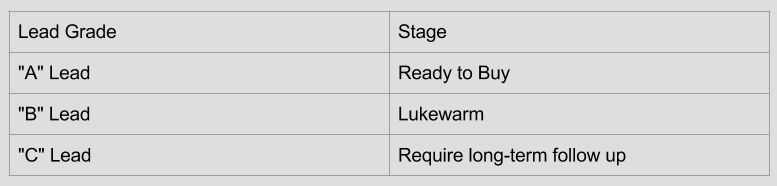
Once you've asked preliminary questions and gotten some feedback from the prospect, it's time to rank your sales leads in priority order. You can make this as simple as ranking them as “A, B, C” – with “A” leads being the most urgently ready to buy, and “C” leads requiring longer-term follow-up.


basic-sales-lead-scoring


Again – ranking sales leads is not an exact science – sometimes your “A” leads will turn out to be more lukewarm than they seemed at first, and “C” leads might turn out to suddenly be ready to buy. But it's a good start to help your sales team prioritize the leads that require immediate follow-up.


Conclusion


The most efficient sales organizations know that the sales process starts with pre-qualifying your sales leads.


Many sales teams have a misguided focus on acquiring new customers at the expense of everything else. Yes, of course it's important to get new sales leads – but what happens once you have first contact with those new sales leads matters even more. Without a consistent process to pre-qualify and rank sales leads, your sales team is likely to get overwhelmed with too many bad sales leads and too many wrong approaches.


Help your sales team get off on the right foot in building relationships with new customers – pre-qualify your new sales leads and learn more about what your customers want, before they ever talk to a sales person.


About the Author: Gregg Schwartz is the vice president of sales and marketing at Strategic Sales & Marketing, a lead-generation firm based in Connecticut. His company helps technology companies and various startups and small-to-mid-size businesses in the business-to-business sales category generate sales leads and improve their sales processes.