Discover how to assess and convey the value added by green features; learn about the greening of the MLS; and understand the benefits of sustainable homes. November 14 at 1:30 p.m. during the REALTORS® Conference & Expo.

Discover how to assess and convey the value added by green features; learn about the greening of the MLS; and understand the benefits of sustainable homes. November 14 at 1:30 p.m. during the REALTORS® Conference & Expo.
You know all about Google Analytics and love the data it provides, but wouldn’t it be nice if there were tools to make managing all of that complex information simpler?
You’re in luck. There are!
These helpful add-ons for Google Analytics not only make it easier to digest data, but also help ensure you’re getting the most out of all Google Analytics has to offer.
Developed by Google Engineer Philip Walton, this spreadsheet add-on makes it easy to pair up your extensive Google Analytics data with the data manipulation tools in Google Spreadsheets. For you, this means better data visualization that you can share quickly and easily with your team.
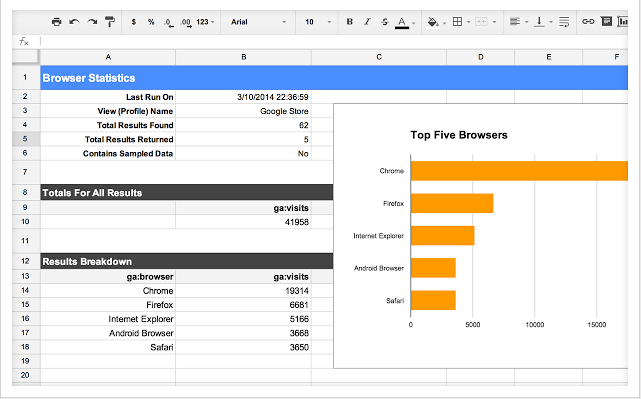
Features include:
You are required to produce various Google Analytics reports on a regular basis. Automation features with this add-on makes reporting simpler, faster, and easy to examine.
Cost: Free
Tag manager for Google Analytics helps you create and update tags for both mobile and website applications without having to write any code. With this add-on, you can launch fresh tags fast without having to wait for monthly code updates. Plus, debugging features help ensure your tags are reliable and working properly.
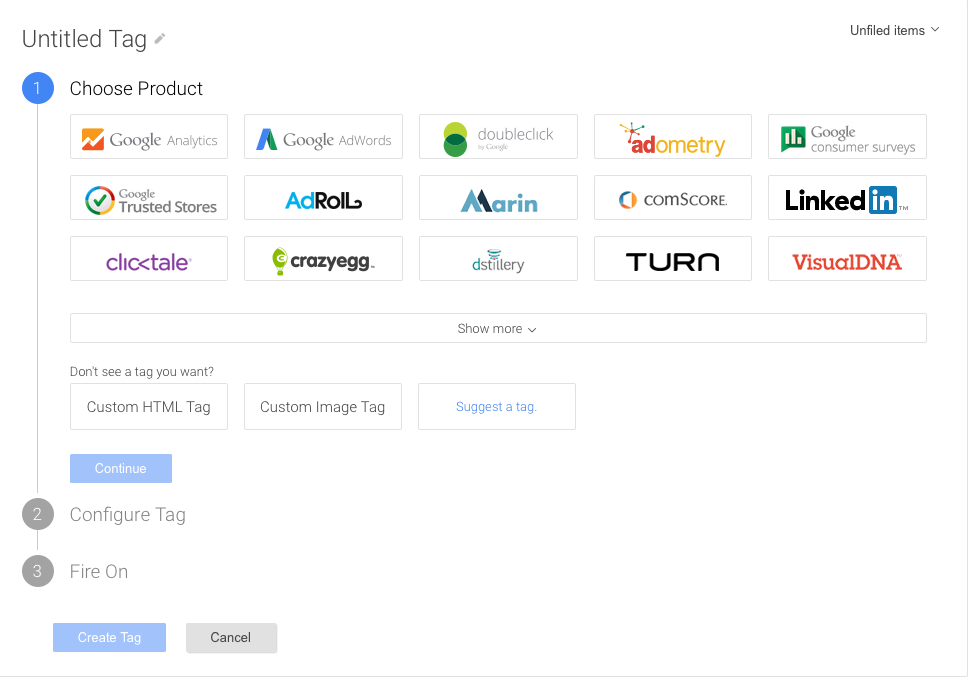
With the data collected by your tags, you can create stronger campaigns and make more informed decisions that help you get the most out of your marketing efforts.
Features include:
You have multiple campaigns running at once and often need to launch tags quickly to respond to real-time events.
Cost: Free
Using Chrome, this add-on uses the debug version of Google Analytics Javascript for all sites. Error messages and warnings are printed in the Javascript console so you can identify any tracking codes that aren’t functioning properly and never miss an important segment of Google Analytics data. Plus, the debugger sends a detailed report of each tracking beacon so you can find tracking code errors and missing data from your reports.
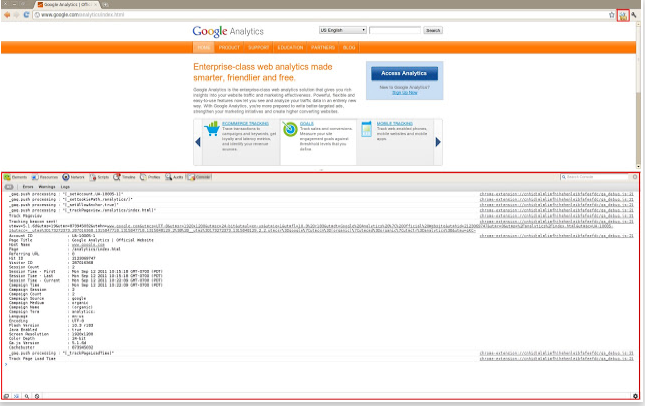
This add-on specifically helps spot incorrect method names, when the method name is cased incorrectly, strings containing leading or trailing whitespace, and when you’ve passed a non-string value using quotes.
You can’t afford errors in your tracking codes. We’re all human—mistakes happen. This add-on keeps you from making costly tracking mistakes by finding and alerting you of bugs (so you can fix things quickly without having to hunt down the problem.)
Cost: Free
This call tracking add-on allows you to integrate your call data with Google Analytics (and Google AdWords) so you can study information such as call length, lead source, and other custom dimensions. Infinity also provides quality insights and ratings that can help to improve customer service efforts and streamline processes related to handling incoming calls. Site visitors are tracked via a custom phone number that ties in with their unique Google Client ID.

With availability in more than 50 countries, this add-on offers versatility to a wide variety of organizations and prides itself on easy integration with various CRMs so that no call goes untracked.
You’re interested in tracking your call data in tandem with website visitors. What once was difficult to study becomes infinitely insightful with this add-on.
Cost: Free trial available
Quill Engage uses artificial intelligence to analyze your Google Analytics information and then transforms it into natural language reports that are easy to understand. Using this add-on, you can set up weekly and monthly email reports for different metrics, or run reports on demand.
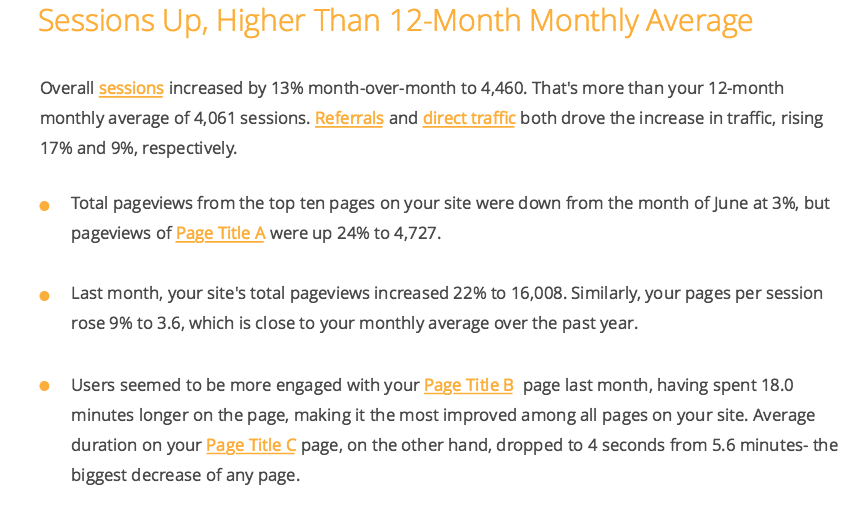
Reports generated by this add-on include instant insights into different metrics (such as where site traffic is coming from) as well as actionable advice on where you can make changes to improve your site—all in a simple Word document format.
You don’t have time to write up detailed reports of Google Analytics data. This add-on makes it look like you broke down all of the detailed statistics into simple, actionable information.
Cost: Free with upgrades from $19.99-$49.99/month
If you need white-label Google Analytics reports as a marketing agency, Wordsmith for Marketing can help. This add-on generates professional-looking reports (written in plain English) that explain ROI in detail via charts, tables, and general notes.
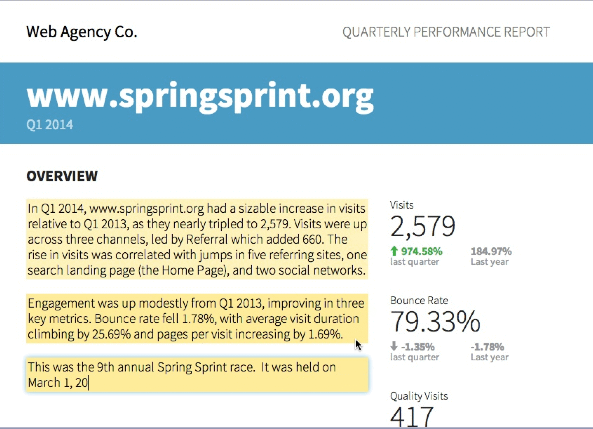
Reports can be automated and sent to clients on a weekly, monthly, or quarterly basis and are 100% editable. Custom reporting dimensions include channels and parameters for conversion tracking.
You are an agency with multiple clients that need detailed reports on a regular basis. This add-on saves time and staff resources and makes analyzing detailed reports fast—so you can put those statistics to work for your customers.
Price: $250-$1,700/month
Google Analytics uses regular expressions (often called regex) to find patterns. Similar to what you learned in algebra class, these expressions work by discovering patterns within reports (like a table filter) and within separate report sets (like view filters). They’re also used to configure goal conversions and to define advanced segments and funnel stages.
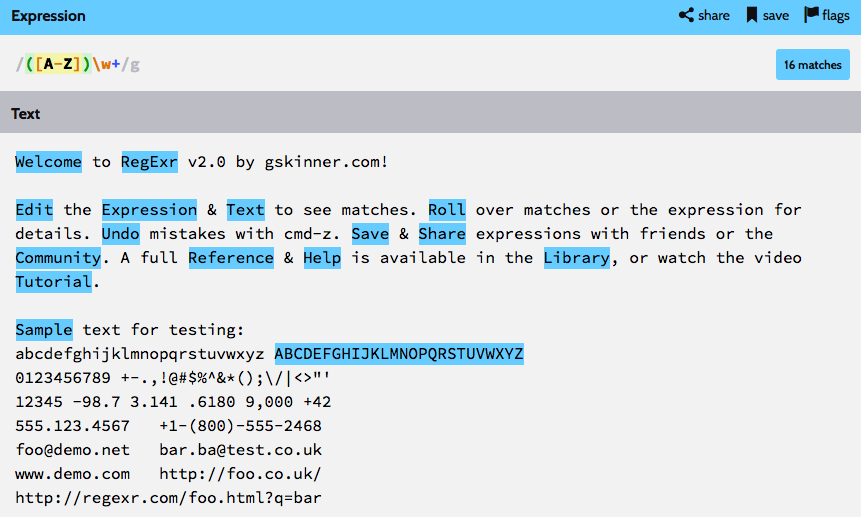
RegExr is a free online tool that lets you build and test different regular expressions that then tie in with your Google Analytics to find interesting trends and patterns you may not have found otherwise.
You’re looking deep within Google Analytics to identify data trends that can increase conversions. This tool lets you work smarter (not harder) to spot patterns that you can then leverage to increase effectiveness with your online strategy.
Cost: Free
Table Booster is a Chrome add-on that improves the information grid within Google Analytics by creating three different types of visual representations for each metric.

Whether you need a bar chart, a heat map, or a grid, you can turn your metric data into simple visuals that are easy to understand. Bonus: This tool also allows you to compare two rows for rate difference via a Z-test that finds statistical significance.
You need to turn your Google Analytics into visual representations. If your team’s eyes glaze over at a report full of numbers, this might be a good way to bring greater understanding to trends and patterns within Google Analytics.
Cost: Free
If you need to copy annotations, remove multiple annotations, or export notes as a CSV, you can use this Annotations Manager in Firefox (thanks to Vincent Giersch.)
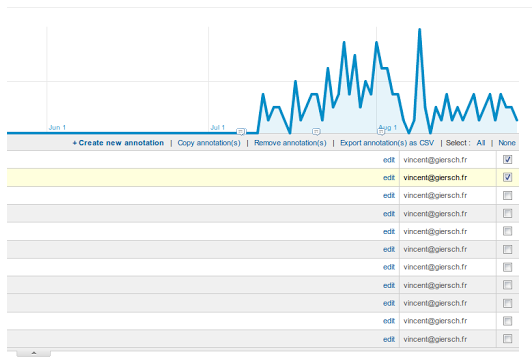
You’re tired of wasting precious time on annotations within Google Analytics. Annotations Manager lets you make multiple edits all at once instead of having to go through each individual line item.
Cost: Free
Using this add-on, you can save a few steps while generating custom URLs within Google Analytics.
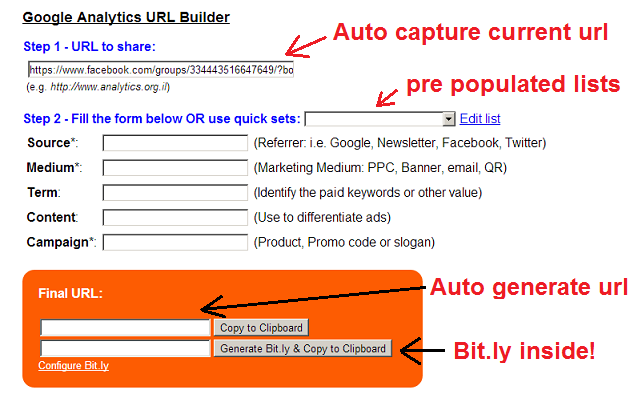
This more robust version of the Google Analytics URL Builder has increased functionality, which includes:
You use Bitly links in your campaigns and hate having to switch between screens to generate links. This add-on can speed up the campaign URL generation process so you have more time to focus on results.
Cost: Free
UserReport.com syncs with Google Analytics to fill in data gaps. Using surveys, UserReport asks site visitors questions about their gender, income level, and other custom dimensions, and then integrates with your existing Google Analytics data.
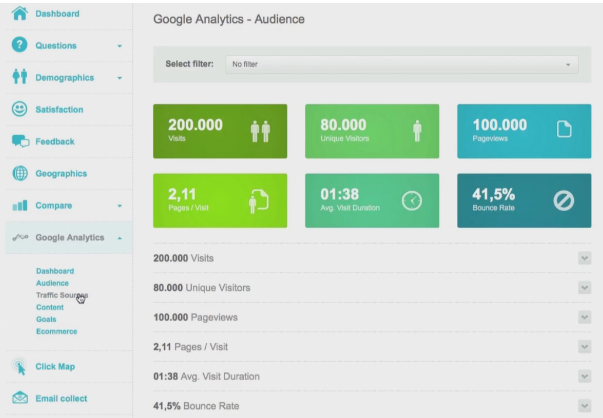
UserReport then helps you find in-depth information about conversion paths and learn exactly who your target customers are online.
You need deeper data about your website visitors to further define your niche online.
Cost: Free
If you use Microsoft Excel to manage your Google Analytics data, the Analytics Edge add-on allows you place query results anywhere on a worksheet that refresh with one click.
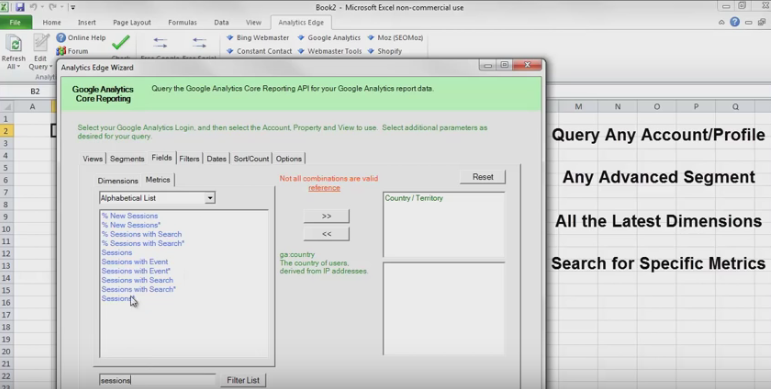
This means you can have multiple queries, used advanced segmentation, and search for specific metrics all within a single custom spreadsheet. The free version works for single channel data.
Your Google Analytics data lives in a custom MS Excel spreadsheet. Using this tool, you can update information quickly (and without having to export and import new information every time.)
Cost: Free
Thanks to OWOX BI ROI, you can calculate daily cost data of your external ad campaigns and to upload it to Google Analytics. Thus, you can compare your PPC efforts via Bing, Yahoo, Facebook, and other platforms all in one place.
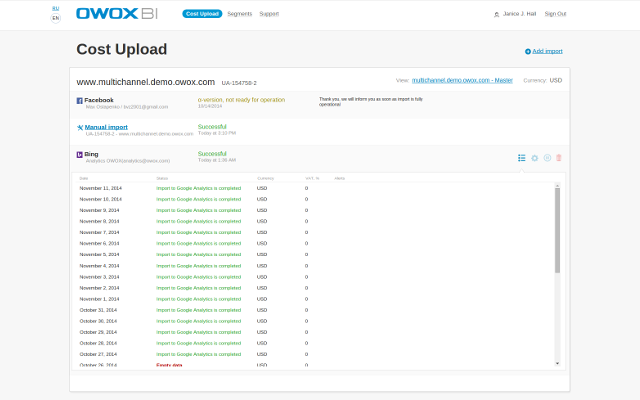
Once it’s setup, you can study the cost, clicks, impressions, and more from your AdWords and non-AdWords campaigns to discover which advertising channels are bringing you the most ROI (without switching screens.)
You need ROI data for external advertising campaigns side-by-side with your online advertising mediums so you can identify what really works.
Cost: Free
Need to visualize user search data in real time? The Live Site Search Visualisation add-on accesses the Google Analytics real time reporting API to showcase live search activity with colored tiles.

Now you can see what people are looking for at any moment within a colorful display that’s easy to read.
You want to leverage your Google Analytics data for an insightful art piece within your workspace.
Cost: Free
Your time is precious. Use these add-ons to make time spent analyzing Google Analytics data more effective and efficient (so you can get back to the other million things on your to-do list.)
Plus, they might even help you find that missing metric you weren’t quite sure how to track.
Are there any other add-ons you’d put on this list?
About the Author: Kaleigh Moore is a freelance writer and social media consultant who works with SaaS companies to create interesting, insightful content people actually want to read. Find her on Twitter @Kaleighf.


Rebranding. It’s the latest marketing trend in a whirlwind of efforts to appear fresh, new and relevant to today’s audiences. But oftentimes, a rebranding campaign focuses too much on the aesthetics and too little on the core components that drive it.
Rebranding is about more than just slapping up a new logo and calling it a day. It’s about helping your company, and your customers, make the switch gradually and confidently to a company that demonstrates how it aligns with the very same values it presents to its customers every day. It’s about making sure that pride, quality and satisfaction are more than buzzwords. And it’s about honoring your commitment to the new brand without abandoning the old.
Here are five companies that successfully rebranded themselves – and what you can learn from them.
The Problem:
The pharmacy. It’s where you go to get your medications, your vitamins, your protein shakes and your cigarettes.
Say what?
The Rebranding:
CVS is the first chain pharmacy to stop selling tobacco products – which, although they accounted for around 4% of its sales, was a positive step that perfectly illustrates the company’s commitment to health. In addition, they changed their name to CVS Health from its previous iteration as “CVS Caremark” (which meant nothing to anyone but them).
Changing their name and their stance on tobacco products resulted in doing more for the brand that nearly any other marketing initiative they’ve done. Through public relations support and social media buzz, they were able to generate over 100,000 tweets and even a comment from the President.
By making their actions louder than their words, CVS as proved that they stand for something rather than just talking about it. So far, no other pharmacies are following suit, but at this point, it really doesn’t matter – since the first one to make a bold move is always the one you remember.
What You Can Learn from Them:
When rebranding, make a strong statement and then stand behind it, even if it seems to be bold or unpopular at the time. Your unwavering commitment and dedication is what people will remember, and suddenly, the bold, fresh step you took becomes the norm. Just look at smoking on airplanes and in restaurants to see an example of this philosophy in action.
The Problem:
Burberry is commonly seen as a luxury brand. With over 150 years of history, this company brought the popularity waterproof gabardines and trench coats to our shores. Their iconic design is reflected everywhere, from clothing to handbags to fragrances. Unfortunately, they had also become a target as gangwear.
At one point, the use of the brand by thugs was so widespread that anyone caught wearing Burberry was banned from certain city pubs.
The Rebranding:
High priced clothing is always going to be attractive to gangs, but Burberry took the initiative in reinventing itself, putting a sexy spin on utility clothing and getting endorsements from well-known and well-liked celebrities.
Of course, the transformation wasn’t completely about focusing on the new and forgetting the old. Burberry still carries trench coats and swimwear – except now, they’ve taken an even more creative, artistic approach without sacrificing the 150 years of heritage and brand goodwill they’ve generated.
What You Can Learn from Them:
Although there’s nothing you can do to keep your brand from being adopted by an unintended target audience, you can look for ways to adjust that brand to become more modern and unique, without giving up years of quality and the reputation you’ve built.
The Problem:
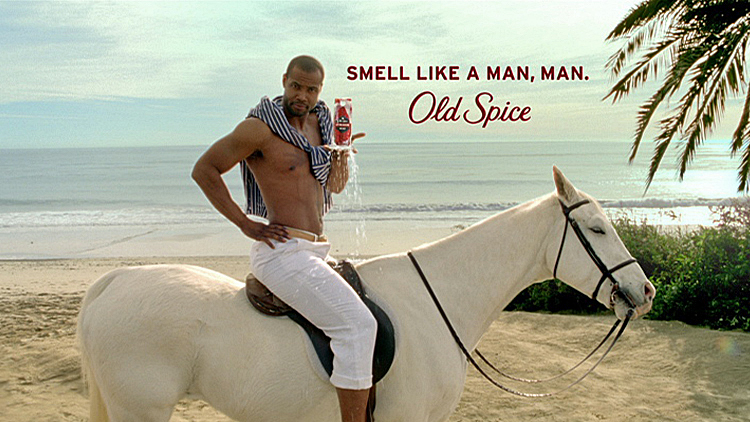
Old Spice is a men’s deodorant much like any other. It reminds many of the younger generation of their grandparents. Interestingly enough, the very first Old Spice was designed for women. When you think of something old-fashioned, you tend to think of stagnant, head-in-the-sand, traditional and unflattering fragrances. It may seem hard to sell something as everyday as deodorant, after all, there are thousands of options out there.
The Rebranding:
Old Spice worked with NFL Player Isaiah Mustafa, affectionately known as the Old Spice Guy, on a series of commercials aimed at women that portrayed Old Spice as something seductive and alluring. It even referred to its deodorant and body wash line as “scent vacations” rather than the same, old, antiperspirant pitch we’ve heard a million times before.
In addition, Old Spice didn’t have to change its logo. Rather it changed people’s impressions of Old Spice by using someone young, fun and attractive – all qualities that Old Spice wants people to think of when choosing their deodorant.
What You Can Learn from Them: Message and brand consistency are crucial in improving customer awareness and sales. Look for ways to turn something everyday (deodorant) into something new and interesting (scent vacations).
The Problem:
Pabst Blue Ribbon is an inexpensive, commonly found beer that’s hugely popular among the college and fraternity crowd. It’s not exceptionally refined, nor is it artisan quality – at least not in the U.S. China, however, is a different story.
The Rebranding:
Pabst is known as Blue Ribbon 1844 beer in China, based on the year the company was founded. A third party licensed the Pabst brand and formulated the beer slightly differently than its American version. The Chinese version sells for a whopping $44 and is hugely popular due to an upswing in the artisan beer market from upper middle class Chinese consumers.
Why China? Well, they have leaped beyond the U.S. and even Germany as the world’s largest beer drinking market, so although the ad itself (above) looks like something you’d see for a fine wine or brandy, it’s actually the very same Blue Ribbon you see at keg parties.
What You Can Learn from Them
It’s never too late to change what people associate with your brand. One culture’s perception of what you stand for may be radically different from another – something that is particularly important for companies that do business on a global scale (which means pretty much any business on the internet!)
The Problem:
If I say the words “high fructose corn syrup” do you cringe? If so, you’re like the millions of others who have been clamoring for changes in the things we eat and drink every day. Facing a backlash from consumers over the rising rates of diabetes and obesity, food and drink manufacturers have started putting sugar back into their foods (as evinced by “Mountain Dew Throwback” and other original formula items) in place of previously favored high fructose corn syrup.
Not surprisingly, the corn industry is upset by this sudden vilification of their product.
The Rebranding:
Seeing money slip through its fingers, the corn industry rapidly tried a rebranding tactic that, had it worked, would’ve been a very slick trick. From a health point of view, it was rather low and sneaky. From a marketing point of view, it was brilliant. The answer?
Relabel corn syrup as corn sugar!
Corn sugar sounds natural and healthier than “high fructose corn syrup” doesn’t it? And it doesn’t have the same stigma that corn syrup has. Fortunately (or unfortunately for the corn industry), the FDA said “nope!” For one thing, syrup and sugar are two different substances. For another thing, corn sugar already exists (it’s chemically known as dextrose) and it has been used for over 30+ years by people who have had trouble digesting or processing sugar.

The Problem:
RadioShack wanted to expand its brand to be more than just where your grandparents used to shop or where amateur hobbyists went for odd batteries.
The Rebranding:
They decided to rename themselves “The Shack” – but that didn’t help either. You don’t associate “The Shack” with electronics or technology. You associate it with a run-down place where questionable things happen. And for RadioShack, that, along with many other factors was the final nail in the coffin.
Had you been in charge of their rebranding effort, what would you have done instead? Tell us in the comments below!
About the Author: Sherice Jacob helps business owners improve website design and increase conversion rates through compelling copywriting, user-friendly design and smart analytics analysis. Learn more at iElectrify.com and download your free web copy tune-up and conversion checklist today!


“I have not thoroughly enjoyed serving with humans. I find their illogic and foolish emotions a constant irritant.”
On the face of it, the much beloved Mr Spock (originally portrayed by the late Leonard Nimoy in Star Trek: The Original Series) might not seem to have much to do with copywriting.
However, whether you’re a Trekkie or not, imagining that you’re writing your copy for Mr Spock can be a very helpful exercise.

Spock’s character is defined by the logical, emotionally detached approach he takes towards things. Mr Spock doesn’t deal in jokes, flowery prose or puns, three things that are all too common in content that is supposed to be copywriting.
Here’s why I believe writing copy for Mr Spock is a recipe for success. If something is logical it is, by nature, persuasive:
“When you eliminate the impossible, whatever remains, however improbable, must be the truth.”
Persuasion – without being pushy or coming across as trying too hard – is one of the key desirables in sales content, and taking a completely logical “Spock-like” approach to a subject is one way to generate it effectively.
That’s the first big takeaway I want to highlight in this article but there are several other ways in which writing for Spock can help you to develop your copywriting, illustrated by some classic quotes from the man (or, umm, Vulcan) himself.
The “so what?” test – which involves analysing your content by asking “so what?” after each paragraph, or even sentence, in order to ensure that everything you write has a clear point – and “sell benefits, not features” are two techniques often recommended to junior copywriters.
They’re both useful, but they don’t necessarily encourage writers to focus on creating content that’s designed to be directive. For example, lots of copy written by inexperienced writers asks questions:
“Have you ever experienced X? Why not come in and try Y today? We can help! “
Asking “so what?” doesn’t really work here, because “we can help” technically answers that question…just not in a very compelling way.
But you can be damn sure that if Spock read the above, he’d start thinking about all the reasons not to come in and try Y because that’s what the copy actually invites the reader to do.
Apply the Spock test to your copy by following the points you want to make through to their logical conclusion:
“If you’ve ever experienced X, [u]you know how disruptive it can be[/u]. We’ll help you get going with Y [u]so it never happens again[/u].”
That’s a very short, simple example, but hopefully you can see that the end result is a far more clear call to action than just asking questions or rambling about the product or service you’re writing about.
One of the greatest tools in any writer, marketer or businessperson’s arsenal is a hefty dose of scepticism. The amount of “X Is Dead” and “Y Is The Next Big Thing” articles I come across on a daily basis is staggering, but only a tiny percentage of them turn out to be correct.
Best practices are useful to keep up with, but they can also be damaging if you take them as gospel. This is because it’s impossible to convey ALL of the context associated with any research or findings when they are presented in a relatively easy to digest 1,000 word article. And, as Spock says:
“Insufficient facts always invite danger.”
At best, blindly following best practices can result in writing that’s derivative and rehashes work that’s already out there. At worst, it can result in discounting techniques or methods that might actually work very effectively in your niche.
Take this article, for example: writing for Mr Spock is a helpful exercise, but there will be times that you’ll need to evoke emotion with your copywriting. Emotions like fear and envy can be very powerful tools for conversion – sadly I don’t have the space to get into that much here – but you’d never try to evoke them in Mr Spock.
For that reason I’d recommend that you remain hesitant to act on any advice you read unless you’ve seen it have a positive impact, ideally on a piece of work you’ve been actively involved with, with your own two eyes.
The purpose of copywriting isn’t (just) to look nice and read well. Its primary function is to do something. Being well read is a definite advantage for copywriters, but writing prose in the way a novelist would is a huge no-no.
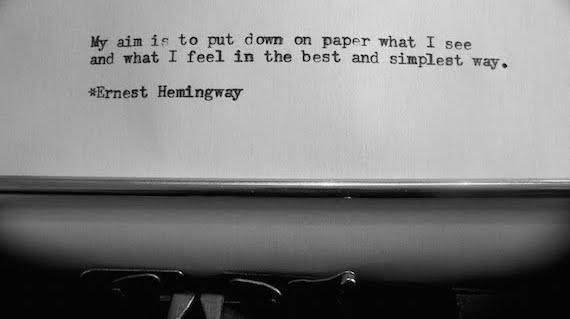
With the possible exception of straightforward, ‘honest’ authors like Hemingway and Kerouac, novel-style prose just doesn’t work as copywriting – this post on Copyblogger does a nice job of showing why lyrical or ‘fluffy’ writing doesn’t make for good copy.
But it can be hard to shake the style you’re used to from reading fiction, as that’s where a lot of writers draw their inspiration. Your new mission?
“To boldly go where no-one has gone before.”
Well, not no-one exactly. But it is time to break out of your comfort zone and expose yourself to a new breed of writers. In particular, figures in online marketing have all sorts of valuable things to say about sales copywriting.
Here are a few examples of individuals from whom I’ve learned a ton to get you started:
But not just any triangles. Specifically, the following triangle:

How any piece of writing looks, functions etc. should always take into account those three things:
For example, a banner ad promoting vacation rentals for people over 60 will look very different to one pushing the same location to a student crowd during Spring Break.
Likewise, a cold email about a new model of electric car won’t have much in common with a sales brochure distributed to a customer who indicates an interest in the subject.
It’s very easy to think, “Ok, I need to come up with some banner ads and content for a pamphlet. What can I cull from the website for that?” But it neglects the impact each of the three points of the triangle has on what the copy will look like.
Of course the content on the website will inform them to some degree but, any time one or more of the points on that triangle mentioned above changes, I’d recommend starting over with a blank piece of paper rather than trying to repurpose content.
“In critical moments, men sometimes see exactly what they wish to see.”
Even the best among us sometimes fail to see things that are right in front of our faces. When I was starting out as a copywriter, I was way too proud. When my copy didn’t work as expected, I would look for excuses:
I found that as soon as I became tough enough to start taking it on the chin, and owning up to it when my copywriting wasn’t right, my writing started failing a lot less often.
The reason for this is that, with that one mindset adjustment, I was suddenly much more open to learning from my mistakes than I had been previously. The earlier you can wrap your head around the concept that “if it doesn’t convert, it sucks”, the sooner you can start becoming a better copywriter.
A big part of that is figuring out what the copy is supposed to do before you start writing it:
However nice a piece of copy looks and however lovely it is to read, the purpose you set out before you start writing should be at the front of your mind the whole time you spend writing it.

The biggest problem new copywriters, or business owners trying to write their own copy, face is they’re too preoccupied with themselves (“the one”): they’re so busy thinking about their business or their writing skills that they forget to focus on potential customers (“the many”).
The iconic Spock quote above, which I’m tempted to frame somewhere in my office, is a reminder that copywriting is first and foremost about the people that it’s being written for and not the person who’s writing it.
Once you have a clear, or as clear as you can get, picture of those people you can then start working on your copy. And, by keeping Spock and these other tips in mind, you’ve got a better chance of coming up with copy that’s:
and, with a bit of luck, primed to convert.
Live long and prosper.
About the Author: Art Anthony is a freelance copywriter based in the UK. He’s worked on email marketing, CRO, blogging and web content for Fitocracy, Crazy Egg and, most recently, next gen live chat startup, Chatra. You can also find him on Twitter.