
Martes, Hunyo 23, 2015
Samsung working to make trucks 'transparent'
Samsung is working on a technology to let people see through giant trucks on the road.

Sabado, Hunyo 20, 2015
Jeni's Splendid Ice Cream is reopening shops after listeria scare
Read full story for latest details.
Biyernes, Hunyo 19, 2015
How to Find Which Subscription Plans Are The Most Valuable Using Kissmetrics
If you’re in the SaaS business, you probably have a few subscription plans. It’s probably something like this:
- Freemium
- Small
- Medium
- Enterprise
All these plans are separated by cost, capability, and some miscellaneous details, such as what kind of support each plan will receive.
But if you’re a marketer, and it’s your job to market the product with these plans, how do you know which one delivers the best ROI? Or which plan leads to the highest churn rate?
Does the small plan have the best ROI? Or is it the enterprise? And which plan has the highest cancellation rate?
The Kissmetrics Revenue Report can help you answer all these questions.
Segmenting Your Revenue
Viewed as a whole, your revenue is like traffic. It’s just one (hopefully, big) number. If you don’t segment (or, put another way, group) it, you won’t know who is sending you revenue, which segments are the most valuable, etc.
The Revenue Report allows you to segment your revenue, which can deliver important insights. Let’s see how.
Here we’re segmenting revenue by subscription plan type (small, medium, enterprise). So all the customers who are in the small plan are put in the small segment, medium are in the medium segment, etc. Since freemium doesn’t deliver any revenue, it is not included in the Revenue Report.
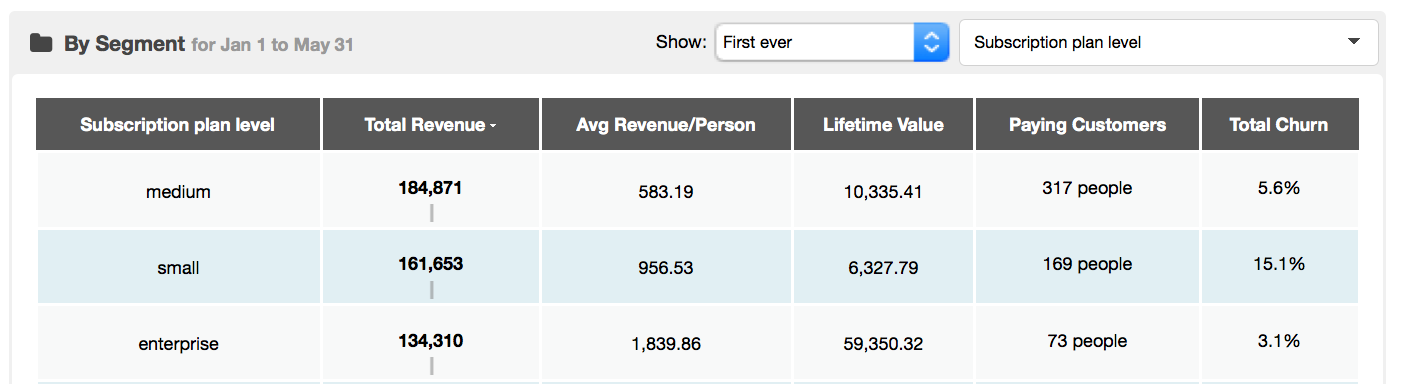
We have 5 metrics for each segment.
Total Revenue is the total amount of revenue that has been received for that segment.
Average Revenue/Person is the average amount of revenue we’ve received from each customer in that segment. It’s simply the total revenue divided by the number of paying customers.
Lifetime Value is the estimated amount of revenue we can expect to receive from each customer in each segment. It’s a calculation of average revenue/person divided by churn rate.
Paying Customers is the number of “active” customers. These are the people we have recorded revenue from who have not churned.
Total Churn is the cancellation rate, or the percentage of customers who stopped paying.
We can see that our medium plan is the segment with the largest revenue. It sends us the most revenue, has the most customers, and has a solid lifetime value. The only downside is its fairly high churn rate.
The small plan is causing problems for our business. While it brings a lot of revenue, it has a high churn rate. We’ll need to investigate ASAP to determine why 15% of the customers in this plan end up canceling.
The enterprise plan excels in nearly every category. While it doesn’t bring us the most revenue, it does have a low churn rate, the highest average revenue/person, and a great lifetime value. Given this data, we should invest more effort in getting customers into our enterprise plan.
Making Decisions with Actionable Data
Kissmetrics reports allow marketers to make data-informed decisions that help guide growth. Let’s see what actions we can take based off the data above.
- The first step is to identify why so many customers in the small plan are canceling. If we don’t already request a reason for cancellation when a customer cancels, we should set that up. If this doesn’t provide any good intel, we can go back to look at the support tickets those customers submitted to see if we can find patterns in the troubles they had.
- Enterprise is a great performing segment. If we can get more enterprise customers, it will quickly become the highest “total revenue” segment. We can use the Kissmetrics People Search to find which channels we acquired our enterprise customers from. (More on that later.)
- We’ll need to do some math (if we haven’t already) and figure out what we’re spending to acquire a customer. We can come up with a rough number by dividing the sum of all sales and marketing expenses by the number of new customers added (David Skok has more on this). The general rule is that “lifetime value” should be at least 3x the cost to acquire a customer.
- If we have a freemium plan, we can use the Kissmetrics Cohort Report to discover whether people upgrade to a paid plan, when they do so, when they refer others, etc.
Using People Search to Get More Actionable Data
We know we want to acquire more enterprise customers, so let’s find out how the ones we currently have found us. We don’t have to leave Kissmetrics to get this data. It’s all in the People Search.
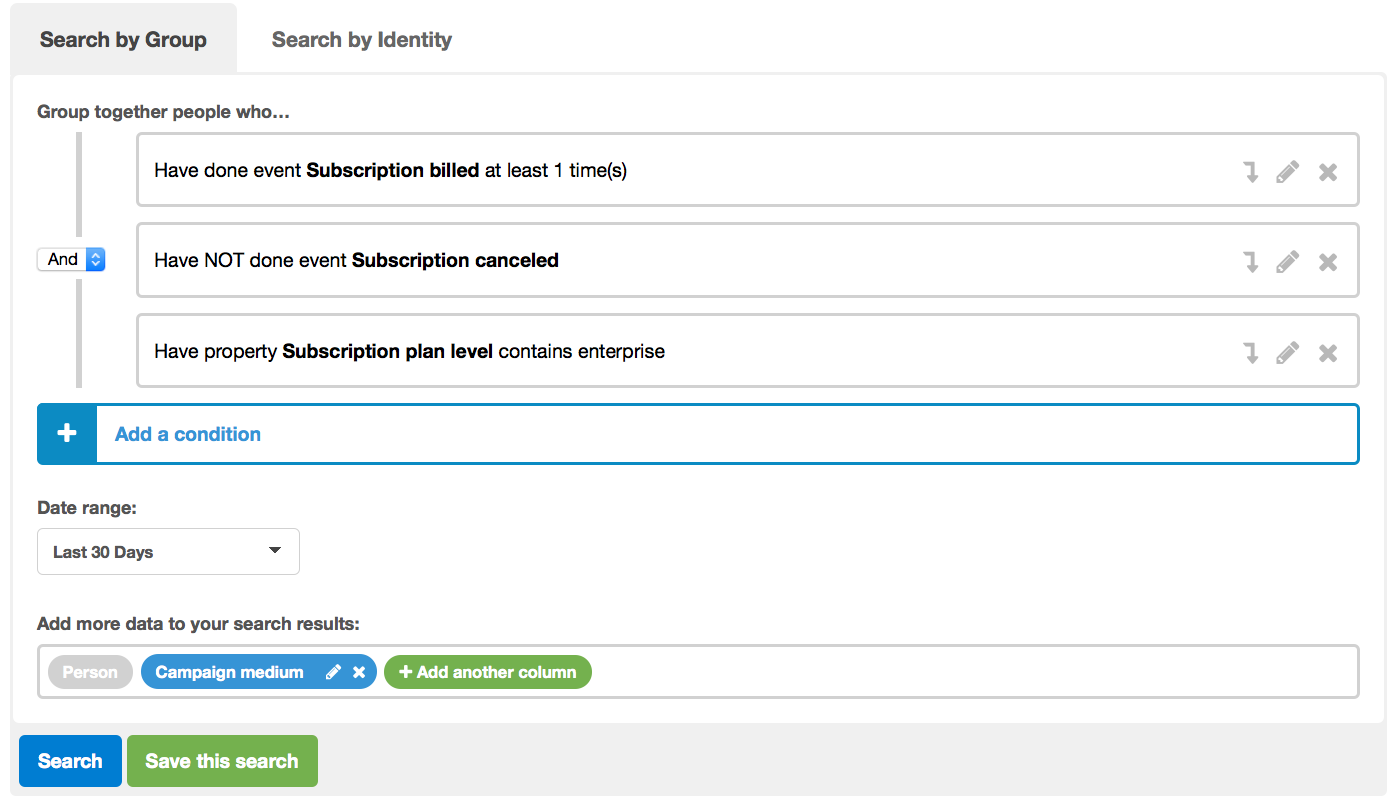
People Search allows us to find specific people based on criteria we set. Here our criteria looks like this:
- We want to find the people in the enterprise plan
- We want to make sure they have not canceled
- We want to know how they first heard about us
This is how our criteria looks in People Search. If we’re using UTM’s, we’ll use the “campaign medium” parameter.
We’ll click Search and get the list of customers that match this criteria:
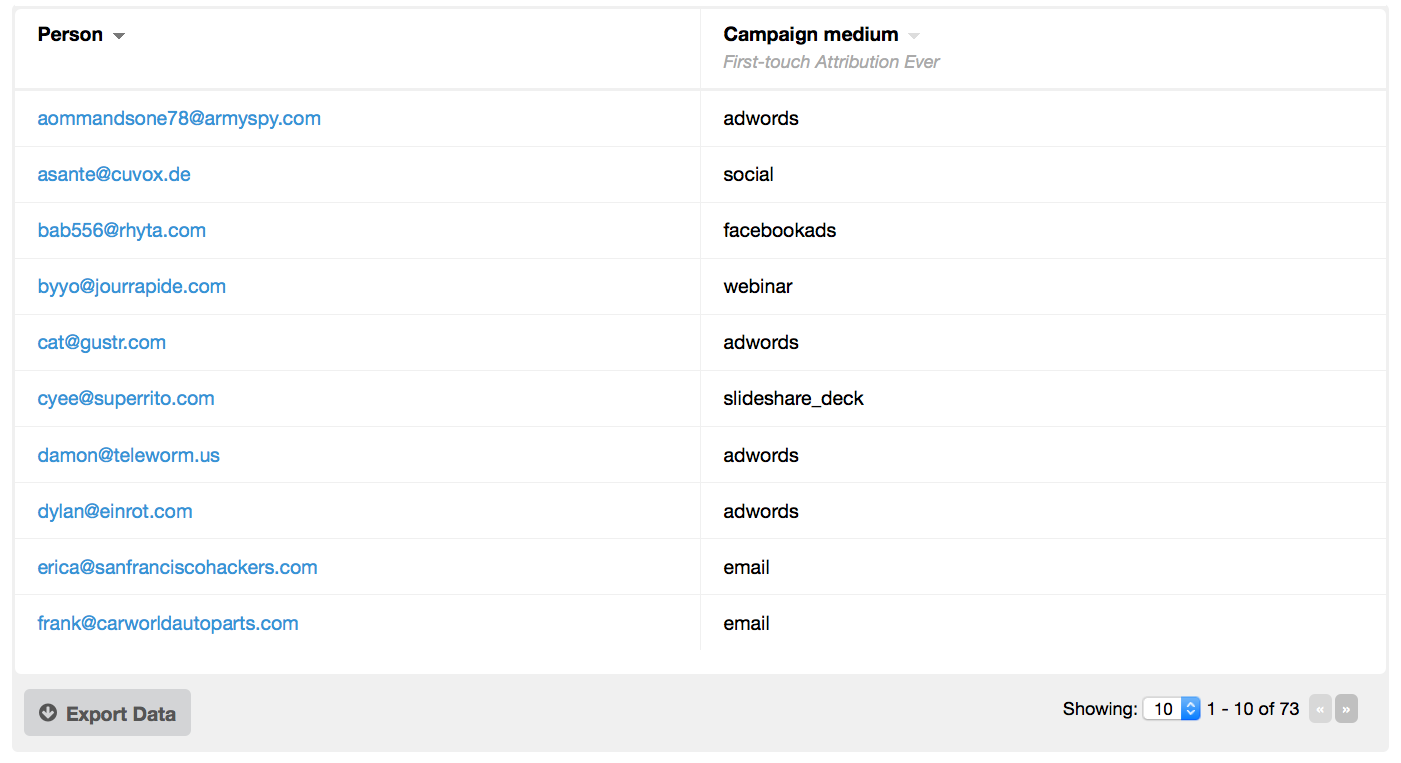
And we get a list of customers in the enterprise plan. We’re looking at only 10 of the 73 customers. We can export this data to a CSV or just expand our view to get the full list. From viewing the first 10, we can see that many of them came from AdWords. We’ll have to look at the full list to know if AdWords represents the majority. If it does, we know that our AdWords campaigns are working, and we can ramp those up by increasing our budget.
How You Can Get Data like This
All this data came from Kissmetrics reports. When you use Kissmetrics, you can get data like this that can deliver actionable insights. You’ll just need a couple of things:
- We certainly don’t require it, but it’s a good idea to start using UTMs to track your campaigns. Kissmetrics tracks channels out of the box, allowing you to see how each is performing. If you use UTMs, Kissmetrics will automatically pick those up, and you can segment your data with any UTM parameter.
- Kissmetrics uses events and properties to track data. Events are actions a person performs on your site (e.g., visiting your site, submitting a form, signing up, using a feature, etc). Properties are characteristics about a person, such as when they signed up (e.g., what day & time), how many times they’ve visited your site, UTMs they’ve been tagged with, etc. When first setting up Kissmetrics, you’ll have to install the JavaScript tracking snippet. You can get help from a developer if you’re unfamiliar with this. Our Customer Success team is here to help you every step of the way, as well.
That’s it! Once you get these things, you’ll be on your way to making better marketing and product decisions.
Two Quick Demos
We used two Kissmetrics reports to get this data – the Revenue Report and the People Search. Wanna learn (and see) more about them? Just click the Play buttons below. We’ll start with the Revenue Report.
Our customers love using People Search. Here’s a video explaining how it works:
To start using Revenue Report, People Search, and the others in our suite of reports, sign up for a 14-day free trial of Kissmetrics. You can also request a personal demo to see how Kissmetrics can work for you.

Not ready to sign up or experience a personal demo? No worries, we have a Demo site set up where you can get an overview of how Kissmetrics works.
About the Author: Zach Bulygo (Twitter) is a Content Writer for Kissmetrics.


Commercial Real Estate Show - Associations that Matter
Jean Maday, NAR's Director of Commercial Services, talked about the benefits of association membership with leaders from SIOR, NAIOP, BOMA, and others during the “Associations for Success” segment of the Commercial Real Estate Show.

Huwebes, Hunyo 18, 2015
NBC's Brian Williams is starting an 'apology tour'
For the first time in four months, suspended NBC News anchorman Brian Williams is meeting with groups of colleagues and apologizing for misstatements that embarrassed the news division.
How to Start Using Explainer Videos (Infographic)
Tell me if you’ve experienced this problem. After sitting at your computer for a couple of hours writing copy for your product/service, you have your first draft complete. Then you realize it’s over 1,000 words long, and no one is going to read it.
For many companies, explaining a product/service through text can seem like writing a book. That’s why video has become so appealing, and why it has been widely adopted as a means of explaining an offering.
There are a few advantages video has over text-based copy:
- Visuals help people understand
- You can convey more information in the same amount of time
- In general, people are more likely to watch video than read text
Given these benefits, it shouldn’t come as a surprise that many marketers achieve a conversion boost after implementing an explainer video. Tech products like Slack, Salesforce, Crazy Egg, and Help Scout are all currently running videos on their homepages for a reason. Why not give it a try?
Today’s infographic provides guidance on why videos work so well, the different types of videos (along with how much they cost), and tips for producing a great video.
 "Pin It")

Courtesy of: Quick Sprout
If you don’t produce in-house, check out firms like Demo Duck, Grain and Mortar, Switch Video, or Sean Duran. All are quality producers and will deliver excellent work.
About the Author: Zach Bulygo (Twitter) is a Content Writer for Kissmetrics.


How to Disrupt Your Sales Funnel for Better Results
The sales funnel guides customers through a journey. Your business should aim to change the ordinary purchasing transaction into a fun-filled festival. Lead your team toward more sales with a creative approach.
Generating sales online is a process, not a single event. To acquire customers, a variety of marketing and sales strategies must be implemented to convert prospects into paying customers.
Moreover, a business’s sales funnel is only as effective as the team that runs and maintains the sales process. According to MarketingSherpa, 57% of B2B organizations identify “converting qualified leads into paying customers” as a top funnel priority, but 65% of B2B marketers have not established lead nurturing.
If you desire better results, it’s time to do things differently. Disrupt your sales funnel with these five strategies:
1. Reimagine Your Ideal Customer
No business exists without its clients. However, every client won’t help build your business. Discover how your product or service can avoid fear, refocus desire, or channel pain.
Learn the psychology behind your ideal clients’ problems. The ideal customer profile should include more than the person’s age, gender, and job status. Demographics only offer broad descriptions of people such as, female executives aged 40-65 or mid-level managers at a consulting firm. You should strive to dig deeper.
Consider learning about your clients’ psychographics. Study their behaviors, habits, and lifestyles. Learn how they spend their money and time.

Source: Building An Ideal Client-Customer Profile
Analyzing your customers’ complaints can help you develop the profile. Ivana Taylor, a marketing strategist, states:
“When you think about it, a complaint actually uncovers what your customer is ‘committed to’ or is trying to do but doesn’t succeed. So if you uncover complaints about late deliveries, you have customers who have tight time commitments and that is a powerful profiling attribute.”
Lesson #1: SaaS Sales Funnel
Meet Jerry. He owns a custom software development company. After testing his marketing site and ads without landing any customers, Jerry sought out Lincoln Murphy of Sixteen Ventures.
Fed up with the lack of results, Jerry wanted to get moving. His initial thoughts were to reduce free trial time and set up a credit card wall. Murphy advised against this approach because punishing prospects wouldn’t increase Jerry’s conversions.
Instead, Murphy helped Jerry define his ideal customer. Who would immediately receive value from his software? More importantly, Jerry also described the wrong customer for his business.
After these simple exercises, Jerry realized that the wrong customers were signing up for his free trial offers. With a better understanding of his ideal customer, Jerry fixed his leaky sales funnel and started targeting his ideal customer.
Next Steps
- Create an ideal customer profile with your team.
- Restructure your sales and marketing strategies to fit your clients’ needs.
- Learn more about customers via surveys and focus groups.
- Analyze customers’ complaints to adjust your sales approach.
2. Transform the Onboarding Experience
First impressions always matter. When people visit your website, they should experience a theme park adventure. Prospects should be awed by your work, greeted by friendly help desk reps, and streamlined through a purchase process.
Don’t make false promises. Customers may expect a few minor mistakes when a new product rolls out. However, don’t launch a product to market if you are not ready to fully deliver on your promises.
When you set unrealistic public expectations, your customers move on, and your company will lose integrity. So, create a strategy where new users can quickly succeed.
Lesson #2: Groove’s Early Days
Groove offers help desk software to small businesses. The founder and CEO Alex Turnbull is transparent about the early failures of the startup.
The company initially had a wish list of features. Like most startups, the team thought more features would add more value to the product. However, each “new” feature did just the opposite and pushed their launch date back.
Turnbull and his team recognized that boatloads of features and ancillary apps didn’t equate to paying customers. Groove’s sign-up conversion rate was less than 2%.
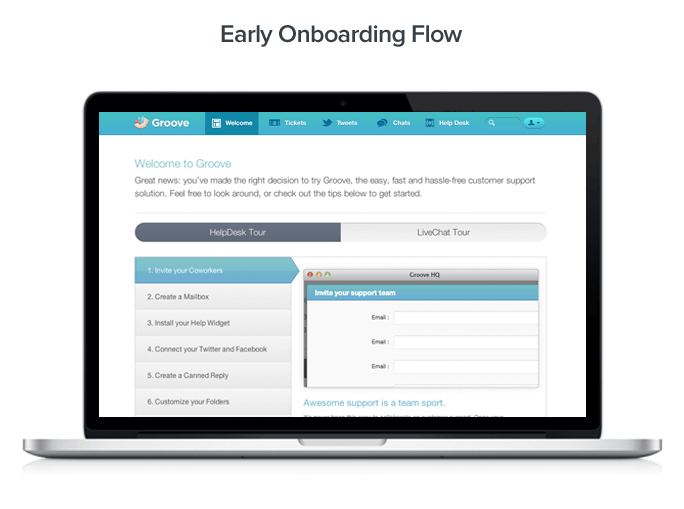
This onboarding experience is pretty involved…
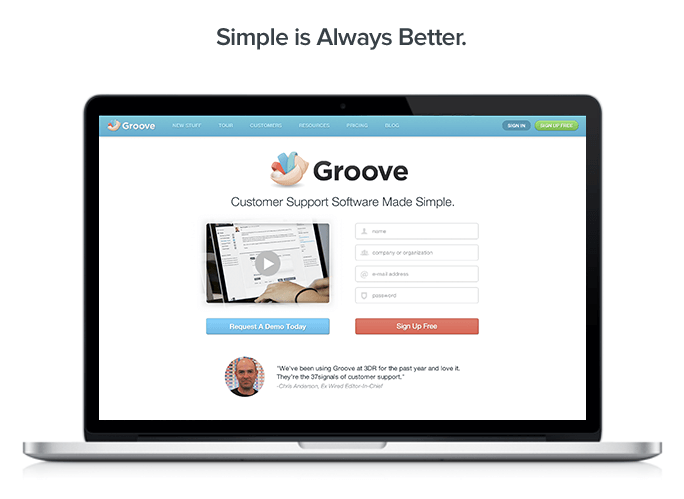
Much better! Source: 3 Early Fails That Nearly Killed Our Startup
In the end, the team learned to focus on what they did best. They launched a three-page site that was “hyper-focused on the benefits.” (See image above.) And guess what happened? Conversions tripled overnight!
Next Steps
- Show customers your product benefits, not features.
- Test assumptions often and early.
- Make the sign-up process easy.
- Create behavior-driven messages to get your clients to take action.
3. Reevaluate Conversion Benchmarks
Are you aiming too high or too low? Discuss metrics with your team members. From website traffic to free trial users to email signups, decide what it takes to convert prospects into buyers.
Develop sturdy conversion architecture. Your audience should be moving smoothly from the unaware visitor stage to the satisfied purchaser stage. Keeping potential buyers engaged with content updates and email newsletters work well. You also should try other cost-effective opportunities, like mini-workshops or webinars.
Metrics vary from business to business. Hence, there are no one-size-fits-all benchmarks, but Fred Spring, cofounder of 98toGo, recommends you focus on five metrics to check sales funnel efficiency:
- Content Visits or Page Views
- CTA Click-through Rates
- Landing Page Submission Rates
- Email Click Rates
- Conversion Rates
Lesson #3: Reducing Churn by 22%
Mention, a real-time media monitoring app, struggled with its churn. The team realized it couldn’t sustain due to a huge leap in customer growth—from hundreds to over 200,000. They also knew “paid and free trial members were more valuable than users with a free plan” and that webinars were a great conversion tool.
Various techniques changed how the company offered value. First, users were segmented by membership type to prioritize help tickets of more valuable users. Automated marketing emails were sent to entice free trial users to receive “Pro Tips” after activation.
Mention emailed monthly case studies highlighting success stories, like the one pictured below. In addition, they created a webinar that demonstrated the service’s potential with examples from actual clients.
By increasing communication with its customers, Mention reduced it churn by 22% in a single month.
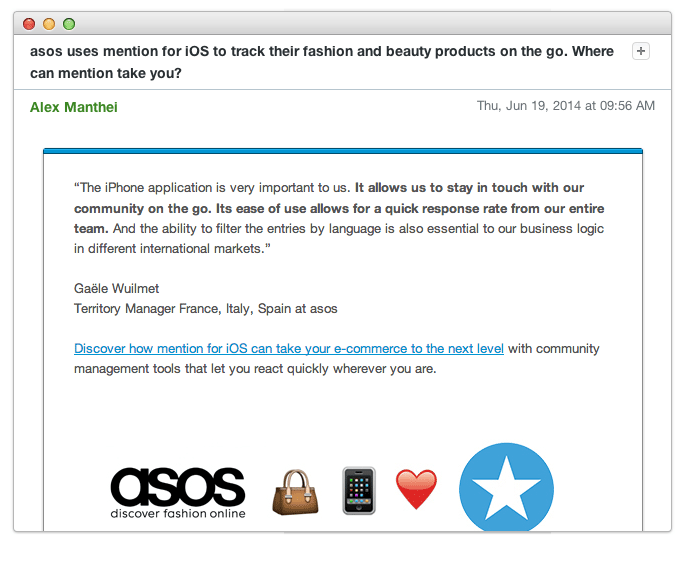
Source: 9 Case Studies That’ll Help You Reduce SaaS Churn
Next Steps
- Track actions leading to customer cancellations.
- Calculate customer acquisition costs and lifetime value.
- Show the value of your service; offer guides and tutorials.
4. Increase Human Follow Up
Automation can become dull and too predictable. Emails are good, but phone calls are even better. Give clients more human interaction.
The customer service experience is a make-or-break event. According to the 2011 Customer Experience Impact Report, 89% of shoppers have stopped buying from online stores after experiencing poor customer service. A research study also found that 31% of online shoppers in the US and UK are more likely make a purchase after a live chat.
Leo Widrich, co-founder and COO of Buffer, says, “Customer support is the very rare opportunity to connect to your customers on an emotional level. You can’t do that in any other way.”
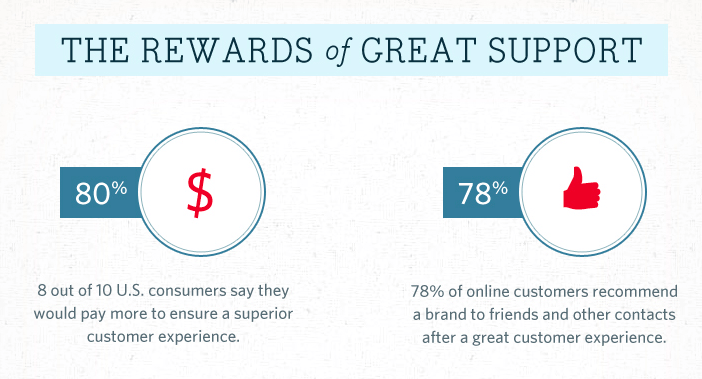
Source: What Bad Customer Service Costs Your Business
Lesson #4: Make Another Call
Not every person falls in love with your product after the first showing. And most likely, it doesn’t mean they won’t purchase the product. It just means your team needs to engage the potential client more effectively.
Lead nurturing is about follow up. According to the Lead Simple Academy, “The goal is to stay in front of prospects in a way that creates value rather than annoyance.”
Create a follow up schedule. Set clear expectations for discussion topics and contact times. Be mindful that your frequency of communication will depend on the level of interest from the prospect.
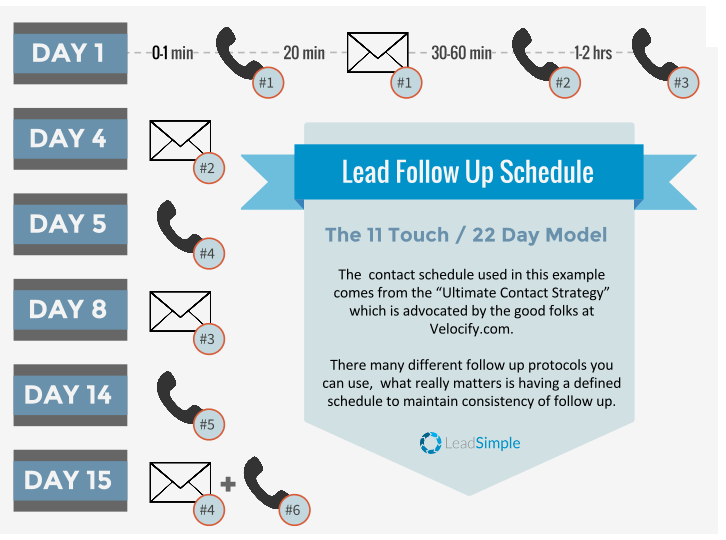
Source: Dominant Follow Up Strategies
Next Steps
- Brainstorm how to amplify the customer service experience.
- Build an emotional connection with customers; skip the superficial relationships.
- Actually talk to your customers, and ask them meaningful questions.
- Create surprise reciprocity.
5. Reward Loyal Customers
Don’t get addicted to constantly wanting new leads. Break ground by rewarding your current customers with special offers and first-time access to new products. Generate more sales with the folks who love you the most.
Similar to other types of businesses, SaaS companies are susceptible to customer disloyalty. If you expect to earn recurring revenue, expect to give recurring value. By satisfying customers regularly, you decrease the risk of customer churn.
Jenna Hanington, a marketing content specialist at Pardot, suggests you consider the following three questions when making goals to increase your customer retention rates:
- Are you actively cultivating relationships with your existing customer base, and not just with potential buyers?
- Are you running upsell campaigns to encourage your current customers to try different products or services that you offer?
- Do you have ways to reward loyal customers?
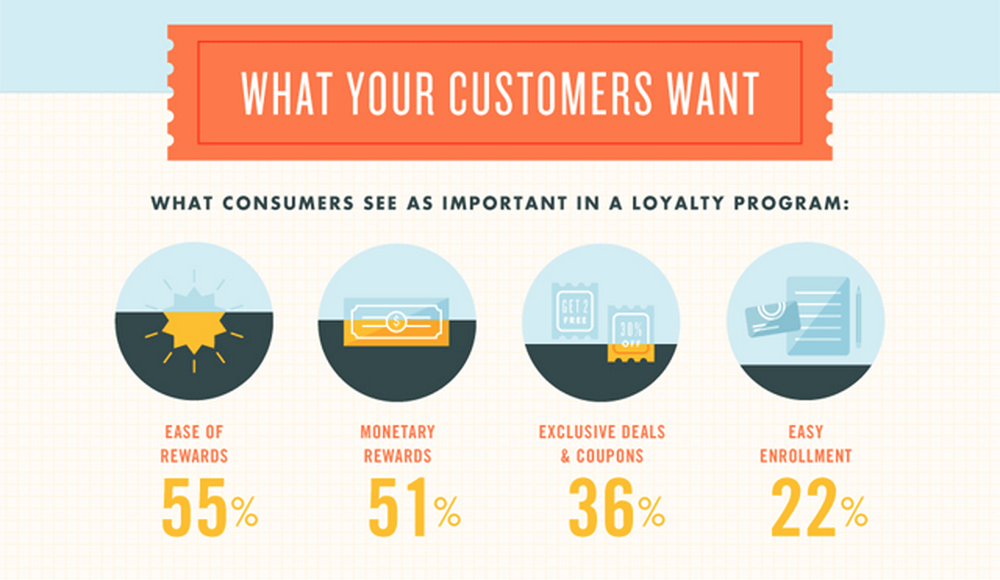
Source: Finding Benefits in SMB Loyalty Programs
Lesson #5: Flow’s Delight Days
The team at Flow, a collaborative task management app, strives to make their customers smile. The staff enjoys watching their users discover something brand new.
So, the team created Delight Days. The purpose of the designated day is to focus on taking the organization to the next level by working on “pet projects, small annoyances, and silly ideas.”
In one day, the team manages to suggest, design, and build concepts.
From creating new copy to updating tutorial videos, the short timeline gives employees a different workflow, while “ensuring that customers are always the #1 consideration.” It’s a simple reminder that happiness starts with the customer.
Next Steps
- Create a customer loyalty program that adds value.
- Initiate an email campaign to inform loyal clients about new services.
- Let your team execute projects for the sole purpose of improving the customer experience.
The same plan will get your company the same results. Mix up your strategies to achieve better results. From the onboarding experience to loyalty programs, your company possesses the potential to change your sales funnel process.
Forget stagnant business growth. Think exponential possibilities.
About the Author: Shayla Price lives at the intersection of digital marketing, the law and social responsibility. She inspires a new breed of innovative attorneys at Hearsay Marketing. Connect with her on Twitter: @shaylaprice


Mag-subscribe sa:
Mga Post (Atom)